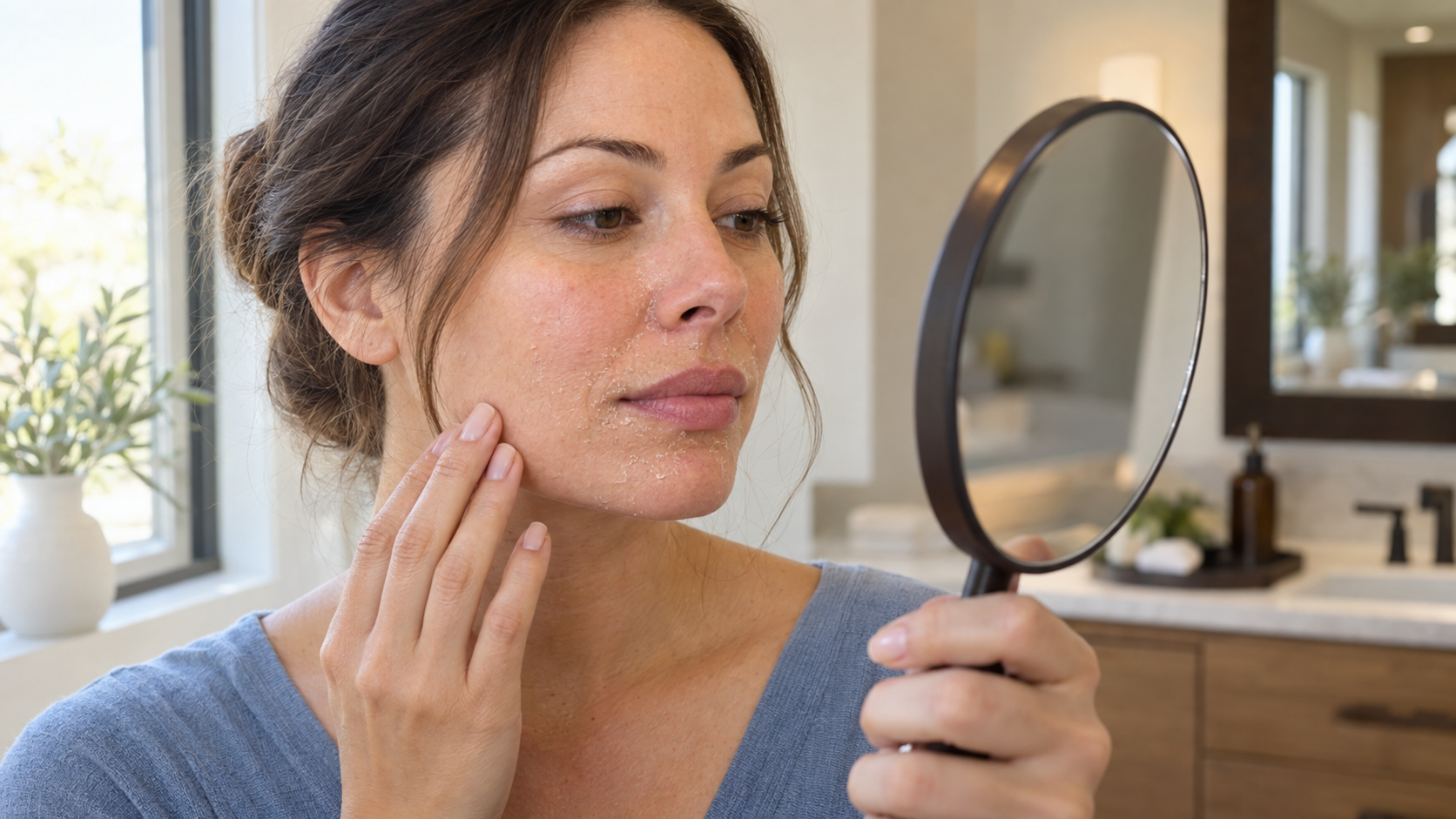
The Area Around the Mouth Is Constantly Moving
The lower face is one of the most dynamic areas of the face.
You use the muscles around your lips when you:
- Speak
- Smile
- Laugh
- Eat
- Drink
- Purse your lips
- Make facial expressions
Over time, repetitive movement combines with changes in collagen, elastin, skin thickness, facial fat, and structural support. The result may be fine vertical lip lines, deeper folds, changes in lip definition, or creases extending from the corners of the mouth.
Because several age-related changes can happen simultaneously, choosing filler based only on the location of a wrinkle can oversimplify the problem.
Different Fillers Have Different Jobs
Dermal filler is not one standardized substance with identical properties across every product.
Different formulations can vary in:
- Softness
- Flexibility
- Firmness
- Structural support
- Integration with surrounding tissue
- Suitability for areas with frequent movement
A softer, flexible filler may make sense for a delicate moving area, while a more supportive product may be considered for a deeper fold or an area affected by structural volume loss.
The best filler for lip lines is therefore the product that matches the anatomy and treatment goal—not automatically the most popular filler or the one a friend received.
Jump To:
- TLDR Quick Guide
- Why Do Lip Lines and Mouth Wrinkles Develop?
- What Are the Different Types of Wrinkles Around the Mouth?
- What Type of Filler Is Usually Considered for Fine Lip Lines?
- What About RHA 2 for Wrinkles Around the Mouth?
- When Might JUVÉDERM VOLLURE XC Be Considered?
- Fine Lip Lines vs Deep Wrinkles: Why the Difference Matters
- Is the Best Filler for Lip Lines Always a Hyaluronic Acid Filler?
- Should You Fill Every Vertical Lip Line?
- Does Treating Lip Lines Make the Lips Bigger?
- Can Filler Treat Smoker's Lines If You Have Never Smoked?
- Is Filler Enough for Very Fine Wrinkles?
- Can Botox Help Lip Lines?
- Can Laser or Resurfacing Treatments Help?
- How Does an Injector Choose the Best Filler for Lip Lines?
- Why Natural Facial Movement Matters
- How Much Filler Is Needed Around the Mouth?
- What Should Natural-Looking Lip Line Filler Look Like?
- What Happens Immediately After Filler?
- How Long Does Filler Around the Mouth Last?
- When Is Filler Not the Best Treatment?
- Questions to Ask Before Getting Filler for Lip Lines
- Choosing the Best Filler for Lip Lines in Albuquerque
- Key Takeaways
- Frequently Asked Questions
TLDR Quick Guide
- The best filler for lip lines depends on the type and depth of the lines rather than one universal product.
- Fine vertical lines around the lips generally require a more delicate approach than deeper facial folds.
- The area around the mouth moves constantly, making filler flexibility particularly important.
- Hyaluronic acid fillers are commonly used for wrinkles and volume concerns around the mouth.
- RHA® fillers are designed with dynamic facial movement in mind.
- RHA® Redensity may be considered for superficial dynamic wrinkles in appropriate patients.
- RHA® 2 is designed to soften mild to moderate facial wrinkles and folds while accommodating movement.
- JUVÉDERM® VOLLURE™ XC is another option used for certain deeper facial wrinkles and folds.
- Lip lines, nasolabial folds, marionette lines, and lost lip volume are separate concerns.
- A filler that works well for one concern may not be ideal for another.
- More filler does not necessarily create a better result around the mouth.
- Conservative treatment can help preserve natural facial expression.
- Some mouth wrinkles are related partly to repetitive muscle movement rather than volume loss alone.
- Skin quality and collagen loss can contribute to fine lines that filler may not completely address.
- Deeper folds can sometimes reflect changes elsewhere in the face, including volume loss.
- Treating the wrinkle alone may not always provide the most balanced result.
- Your injector should evaluate your face both at rest and during expression.
- Existing filler should be considered before additional product is placed.
- Swelling can temporarily affect how the area looks immediately after treatment.
- Final treatment planning should be individualized after an in-person assessment.
- Combination treatment may sometimes make more sense than filler alone.
Why Do Lip Lines and Mouth Wrinkles Develop?
Repetitive Facial Movement Plays a Role
Vertical lines around the lips are sometimes informally called “smoker’s lines,” but you do not need to smoke to develop them.
Normal lip movement happens thousands of times during everyday life.
Repeated folding of the skin contributes to lines becoming increasingly noticeable, especially as the skin changes with age.
At first, lines may primarily appear during movement.
Eventually, some can remain visible when the mouth is relaxed.
Collagen and Elastin Change With Age
Younger skin generally rebounds more readily after facial movement.
As collagen and elastin change over time, that resilience can decrease.
Fine creases can become more noticeable, and the skin around the mouth may appear thinner or less smooth.
This matters when choosing treatment because filler primarily provides volume and support. It does not replace every aspect of declining skin quality.
Facial Volume and Structural Support Also Change
The problem may extend beyond the skin itself.
Age-related changes in facial fat, bone, lips, and surrounding tissues can alter the support available to the lower face.
That means a visible wrinkle may sometimes be the surface expression of a broader structural change.
Simply filling the line without considering surrounding anatomy may therefore create an unnatural or incomplete result.
What Are the Different Types of Wrinkles Around the Mouth?
Vertical Lip Lines
These are the small lines that extend vertically above or sometimes below the lips.
They can range from extremely fine surface creases to more established wrinkles.
Because the upper lip is highly mobile and relatively delicate, treatment generally needs to be precise and conservative.
Nasolabial Folds
Nasolabial folds extend from the sides of the nose toward the corners of the mouth.
Everyone naturally has these folds to some degree.
They can become more pronounced as facial volume and support change.
A deeper nasolabial fold may require a different filler strategy from superficial lip lines.
Marionette Lines
Marionette lines extend downward from the corners of the mouth toward the chin.
They can contribute to a downturned or shadowed appearance in the lower face.
These lines may involve several factors, including skin changes, facial movement, volume changes, and lower-face anatomy.
Lip Border Changes
Sometimes the concern is not technically a wrinkle.
The lips themselves may lose definition or volume over time, making the surrounding area appear more lined.
Strategically restoring subtle lip support can sometimes influence the appearance of nearby lines without directly filling every individual crease.
What Type of Filler Is Usually Considered for Fine Lip Lines?
Fine Lines Usually Need a Delicate Approach
Very fine lines generally do not require the same degree of structural support used to contour cheeks, chins, or jawlines.
Using an unnecessarily firm or bulky product superficially around the mouth could produce a result that looks or feels unnatural.
Instead, an injector may consider a softer or more flexible hyaluronic acid formulation.
The objective is generally to soften the appearance of the line while preserving natural movement.
RHA Redensity Is Designed for Dynamic Wrinkles
One option that may be considered for appropriate patients is RHA® Redensity.
RHA Redensity belongs to the RHA® Collection of hyaluronic acid fillers and is designed for superficial dynamic wrinkles. That makes its characteristics relevant when treating delicate facial areas where natural expression needs to be maintained.
However, a product being designed for fine dynamic wrinkles does not mean it is automatically the best filler for lip lines for every patient.
The injector still needs to evaluate line depth, skin quality, lip anatomy, existing volume, facial movement, and previous treatments.
What About RHA 2 for Wrinkles Around the Mouth?
Dynamic Areas Need Flexibility
Some wrinkles are more established than very superficial lip lines but still occur in highly mobile areas.
RHA® 2 is designed for mild to moderate facial wrinkles and folds while adapting to facial movement.
That combination can make it relevant when an injector wants both smoothing and flexibility.
The key difference is the degree of correction needed.
A barely visible superficial line and a more established crease should not automatically receive identical treatment simply because both are located near the mouth.
Facial Movement Should Be Evaluated Before Treatment
Your injector should ideally observe the lower face while you:
- Smile
- Speak
- Purse your lips
- Relax
- Animate normally
A wrinkle that appears primarily during movement provides different information from one that remains deeply etched at rest.
AlluraDerm’s RHA® 2 treatment is specifically positioned around maintaining facial expression while softening mild to moderate wrinkles and folds.
That flexibility illustrates why product selection around the mouth should account for movement rather than focusing only on filling visible space.
When Might JUVÉDERM VOLLURE XC Be Considered?
Deeper Folds May Need More Support
Not every wrinkle around the mouth is a fine surface line.
Deeper nasolabial folds and other established lower-face creases may require greater support than delicate vertical lip lines.
JUVÉDERM® VOLLURE™ XC is a hyaluronic acid filler designed for certain facial wrinkles and folds and can provide support without necessarily creating the type of projection associated with more structurally firm fillers.
For the appropriate patient, it may be considered when the treatment goal involves softening deeper folds rather than correcting tiny superficial lines.
One Product Does Not Need to Treat the Entire Lower Face
An injector may decide that different areas need different filler properties.
For example, a treatment plan could potentially involve:
Fine lip lines: a delicate, flexible approach.
Deeper folds: greater support.
Lip volume loss: a product and technique suited to lip enhancement.
Structural lower-face changes: assessment beyond the wrinkle itself.
The goal is not to use as many fillers as possible.
It is to use the minimum appropriate treatment needed to create a balanced result.
Fine Lip Lines vs Deep Wrinkles: Why the Difference Matters
Surface Lines Need Precision
Fine vertical lip lines occupy a relatively small, visible area.
Even minor changes can therefore make a noticeable difference.
Overcorrection can also become obvious quickly.
Conservative placement is especially important when someone wants the lines softened without changing the shape or apparent size of the lips.
Deep Wrinkles May Have Structural Causes
A deeper fold can be influenced by more than surface skin.
For example, age-related changes in cheek support and lower-face volume can influence the appearance of folds around the mouth.
In that situation, directly filling the deepest part of the crease may not necessarily be the only or best strategy.
A full facial assessment helps determine whether the wrinkle itself should be treated or whether supporting areas also need consideration.
Is the Best Filler for Lip Lines Always a Hyaluronic Acid Filler?
Hyaluronic Acid Fillers Are Commonly Used
Many modern facial fillers use hyaluronic acid, a substance naturally present in the body.
Different HA filler formulations can provide varying degrees of softness, flexibility, volume, and support.
Their versatility makes them useful for many facial concerns.
However, “hyaluronic acid filler” is still a broad category.
Two HA fillers can behave quite differently after injection.
Product Characteristics Matter More Than the Ingredient Name Alone
Imagine two tools made from the same material but designed for completely different jobs.
Fillers work similarly.
The fact that two products contain hyaluronic acid does not make them interchangeable.
An injector considers how a product behaves in tissue, how much movement occurs in the treatment area, the depth at which it will be placed, and the desired aesthetic outcome.
Should You Fill Every Vertical Lip Line?
Not Necessarily
A natural-looking result does not require making the skin around the mouth completely line-free.
Some degree of texture and movement is normal.
Attempting to erase every visible crease can require excessive product and may change the natural character of the lower face.
The more useful goal is often softening rather than complete elimination.
Conservative Treatment Can Be More Natural
Subtle filler placement may reduce shadows and make lines less noticeable without dramatically altering the lips.
This is especially relevant for patients who are worried about looking “overfilled.”
Tell your injector exactly what you want.
If your priority is reducing fine lines while keeping your existing lip size, say so during the consultation.
Does Treating Lip Lines Make the Lips Bigger?
Not Always
Treating lines around the lips and augmenting the lips are related but separate goals.
Filler can sometimes be placed strategically around the mouth without creating a significant increase in lip volume.
However, the exact effect depends on:
- Product
- Placement
- Amount
- Anatomy
- Technique
If maintaining your current lip size is important, make that clear before treatment.
Some Patients May Benefit From Subtle Lip Support
Age-related thinning of the lips can sometimes contribute to surrounding lines.
In those cases, carefully restoring some support to the lip itself may complement treatment of the wrinkles.
That does not necessarily mean creating visibly larger lips.
A conservative treatment can focus on proportion, border support, and balance rather than dramatic augmentation.
Can Filler Treat Smoker’s Lines If You Have Never Smoked?
Yes, the Name Can Be Misleading
Vertical lip lines are often called smoker’s lines because repeated lip pursing associated with smoking can contribute to them.
But many nonsmokers develop exactly the same pattern.
Normal facial movement, age-related collagen changes, genetics, environmental exposure, and changes in lip structure can all contribute.
Treatment should therefore be based on the wrinkle rather than the nickname.
Lifestyle Still Matters
Smoking can accelerate visible skin aging and contribute to lines around the mouth, but stopping smoking does not immediately erase established wrinkles.
Sun exposure can also influence collagen breakdown and visible aging.
Aesthetic treatment may address existing concerns, while appropriate skincare and sun protection can help support the skin going forward.
Is Filler Enough for Very Fine Wrinkles?
Skin Quality May Need Attention Too
This is an important distinction.
Filler provides volume and support.
Fine surface wrinkles can also reflect changes in:
- Collagen
- Skin texture
- Hydration
- Sun damage
- Elasticity
If skin quality is a major contributor, filler alone may not address every part of the concern.
Combination Treatment May Be More Appropriate
Depending on the patient, an aesthetic provider may discuss treatments targeting skin quality in addition to filler.
Options could include professional resurfacing, energy-based procedures, microneedling, or other skin-rejuvenation treatments depending on candidacy.
That does not mean every patient needs multiple procedures.
It means the treatment plan should distinguish between volume problems and skin-quality problems.
Can Botox Help Lip Lines?
Some Lip Lines Have a Strong Movement Component
Because muscles around the mouth contribute to repetitive folding, neuromodulators may sometimes be considered in carefully selected cases.
However, treating this area requires precision because the muscles around the mouth are important for normal functions such as speaking, drinking, eating, and facial expression.
This is not an area where more treatment is automatically better.
Botox and Filler Do Different Things
Neuromodulators affect targeted muscle activity.
Fillers provide volume, support, or contour.
If a wrinkle involves both repetitive movement and an established crease, a provider may determine that one approach or a carefully planned combination is appropriate.
The decision should follow an assessment rather than assuming every vertical line needs both.
Can Laser or Resurfacing Treatments Help?
Resurfacing Addresses a Different Layer of the Problem
When lines are extremely fine and accompanied by rough texture or sun-related skin changes, a resurfacing treatment may be considered.
These procedures focus more directly on skin quality than filler does.
That can be particularly relevant when the patient has many fine etched lines rather than one or two deeper folds.
Filler and Resurfacing Are Not Interchangeable
Think of the difference this way:
Filler: addresses support, contour, volume, and certain folds.
Resurfacing: targets characteristics of the skin itself.
A patient can have adequate facial volume but poor skin texture.
Another can have relatively healthy skin but significant volume loss.
The appropriate treatment differs.
How Does an Injector Choose the Best Filler for Lip Lines?
Facial Assessment Comes First
A skilled injector does not need to begin by asking, “Which brand do you want?”
Instead, the consultation should establish:
- What bothers you
- Where the lines are located
- How deep they are
- Whether they appear at rest
- How the area moves
- Whether lip volume has changed
- Whether surrounding facial volume has changed
- Skin quality
- Previous filler treatments
- Desired level of correction
Only then does choosing a particular product make sense.
The Face Should Be Evaluated as a Whole
Wrinkles around the mouth are part of the lower face.
Treating one isolated line without considering surrounding proportions can create an unbalanced result.
A dermal filler consultation at AlluraDerm allows the injector to evaluate facial anatomy, movement, existing volume, and aesthetic goals before recommending a particular filler or combination of treatments.
This individualized approach is especially valuable around the mouth, where small differences in product choice and placement can be noticeable.
Why Natural Facial Movement Matters
Your Mouth Needs to Look Normal While Moving
A filler result should not be judged only from a still photograph.
The mouth needs to move naturally during everyday life.
That means a successful treatment should look appropriate when you:
- Smile
- Laugh
- Speak
- Eat
- Relax your face
Fillers designed for dynamic areas can be useful because they account for the reality that the face is constantly moving.
Flexibility Does Not Mean Lack of Support
A flexible filler can still soften wrinkles.
The important question is how much support is appropriate for the treatment area.
Too little may not adequately address a deeper fold.
Too much structure in a delicate area may create unnecessary fullness.
Matching filler characteristics to anatomy is therefore more important than assuming either softer or firmer is universally better.
How Much Filler Is Needed Around the Mouth?
There Is No Universal Syringe Number
It is tempting to search for an exact answer.
“How many syringes do I need?”
The problem is that the answer depends on anatomy, the number and depth of wrinkles, existing facial volume, product selection, and treatment goals.
Someone with two fine vertical lines may need a very different approach from someone with deep nasolabial and marionette folds.
More Filler Does Not Mean Better Correction
The mouth is an area where overfilling can become obvious.
A conservative first treatment may sometimes be preferable.
The injector can then evaluate the result after swelling has settled and determine whether additional correction is appropriate.
This staged approach can be especially useful for patients who prioritize subtle results.
What Should Natural-Looking Lip Line Filler Look Like?
The Goal Is Usually Softer, Not Frozen
Successful treatment should generally preserve the character of your face.
The lines may appear less pronounced without making the entire area completely smooth or immobile.
Your lips should still look proportionate to the rest of your features.
The lower face should not appear unusually heavy or puffy.
Your Existing Features Should Guide Treatment
There is no universal ideal lip shape.
Someone with naturally thin lips may want to maintain them.
Someone else may want modest volume restoration.
Another patient may only care about the vertical lines and have no interest in lip enhancement.
The treatment plan should reflect those differences.
What Happens Immediately After Filler?
Swelling Can Temporarily Change the Appearance
Immediately after filler injections, the treated area may appear fuller than expected.
Temporary effects can include:
- Swelling
- Redness
- Tenderness
- Bruising
- Minor asymmetry related to swelling
These effects do not necessarily represent the final result.
Allow the area to settle according to your injector’s instructions before judging the outcome.
Follow Aftercare Instructions Carefully
Your provider will give you specific aftercare recommendations.
Follow them rather than relying on generic advice from social media.
Contact your provider if you experience unexpected or concerning symptoms.
Dermal filler complications are uncommon but can sometimes be serious, which is one reason treatment should be performed by an appropriately trained medical professional.
How Long Does Filler Around the Mouth Last?
Longevity Depends on Multiple Factors
Filler longevity varies according to:
- Product
- Treatment area
- Facial movement
- Amount placed
- Metabolism
- Individual anatomy
- Treatment technique
The highly mobile area around the mouth may behave differently from less dynamic facial areas.
Do not assume that one advertised longevity figure predicts exactly how long your individual result will remain noticeable.
Maintenance Should Be Personalized
Some patients prefer to maintain a consistent level of correction.
Others wait until the lines become more noticeable again.
Your injector can recommend a maintenance strategy based on how your treatment settles and how your goals evolve.
Automatic treatment on an arbitrary schedule is not necessary for everyone.
When Is Filler Not the Best Treatment?
Not Every Mouth Wrinkle Is Primarily a Volume Problem
Filler may not be the ideal standalone treatment when the main issue is:
- Very fine surface texture
- Significant sun damage
- Skin laxity
- Predominantly movement-related lines
- Another skin condition
- A concern caused by anatomy that filler cannot appropriately address
This is why treatment should start with diagnosis of the aesthetic concern rather than selection of a product.
Sometimes Doing Less Is Better
A consultation may reveal that you need less filler than expected.
It may even reveal that another treatment better matches your concern.
That is a useful outcome.
A good aesthetic plan is not measured by how many syringes are used.
It is measured by whether the chosen treatment matches the problem while respecting natural facial proportions.
Questions to Ask Before Getting Filler for Lip Lines
Use Your Consultation to Understand the Plan
Before treatment, consider asking:
- What type of lip or mouth wrinkle do I have?
- Is the line primarily related to movement, volume loss, or skin quality?
- Which filler are you recommending?
- Why is that filler appropriate for this area?
- How flexible is the product?
- Will treatment change my lip size?
- Are you treating the line directly or supporting another area?
- Could another treatment work better for part of the problem?
- What amount of correction is realistic?
- What will I look like immediately afterward?
- How much swelling should I expect?
- When should I evaluate the final result?
- What are the potential risks?
- What symptoms should prompt me to contact you?
- How might maintenance work?
You do not need to choose the filler before arriving.
Choosing the appropriate product is part of the injector’s job.
Choosing the Best Filler for Lip Lines in Albuquerque
Look for Individualized Product Selection
If you are researching filler treatment in Albuquerque, avoid choosing a clinic solely because it advertises a particular filler brand.
A well-stocked injector can select between products with different properties according to what your face actually needs.
That flexibility is particularly useful around the mouth because fine vertical lines, deeper folds, lip volume changes, and dynamic wrinkles may require different approaches.
AlluraDerm Uses a Personalized Approach
AlluraDerm MD Med Spa offers multiple dermal filler collections and evaluates facial anatomy and aesthetic goals before developing a treatment plan.
For someone trying to identify the best filler for lip lines, that individualized assessment is more meaningful than declaring one filler universally superior.
RHA Redensity, RHA 2, JUVÉDERM VOLLURE XC, or another option may be considered depending on the exact concern.
The final choice should be based on what creates appropriate correction while preserving facial balance and natural expression.
Key Takeaways
- There is no single best filler for lip lines for every patient.
- Fine vertical lip lines and deeper wrinkles around the mouth require different treatment strategies.
- The mouth is highly dynamic, so filler flexibility can be important.
- Hyaluronic acid fillers are commonly used for wrinkles and volume concerns around the mouth.
- Different HA fillers have different levels of softness, flexibility, and structural support.
- RHA Redensity is designed for superficial dynamic wrinkles.
- RHA 2 is designed for mild to moderate facial wrinkles and folds in dynamic areas.
- JUVÉDERM VOLLURE XC may be considered for certain deeper wrinkles and folds.
- Product selection should follow facial assessment rather than brand preference.
- Fine lines generally require a more delicate approach than deep folds.
- Nasolabial folds are different from vertical lip lines.
- Marionette lines are also a separate lower-face concern.
- Lost lip volume can sometimes contribute to the appearance of surrounding wrinkles.
- Treating lip lines does not necessarily require making the lips noticeably larger.
- More filler does not automatically produce better results.
- Conservative correction can help maintain natural facial proportions.
- Some wrinkles have a significant movement component.
- Skin quality can contribute to fine lines that filler alone may not fully address.
- Resurfacing or other skin treatments may sometimes complement filler.
- Neuromodulators and fillers perform different jobs.
- An injector should evaluate your face at rest and during movement.
- Deeper folds may reflect broader facial volume changes.
- Treating the surrounding anatomy can sometimes be more appropriate than directly filling every crease.
- Temporary swelling can make filler look different immediately after treatment.
- Filler longevity varies according to the product, treatment area, metabolism, and individual factors.
- A personalized consultation is the best way to determine which product and technique fit your concerns.
The best filler for lip lines is ultimately not determined by which product has the most recognizable name. It is the filler whose properties match the depth of the wrinkle, movement of the treatment area, surrounding anatomy, skin quality, and degree of correction you want.
Frequently Asked Questions
What is the best filler for lip lines?
The best filler for lip lines depends on whether the concern involves superficial vertical wrinkles, deeper folds, lost lip support, or a combination of these changes. Softer and more flexible hyaluronic acid fillers may be considered for delicate dynamic areas, while deeper folds may require different product characteristics. An injector should assess your facial anatomy and movement before recommending a specific filler.
Can filler get rid of vertical lines above the lips?
Dermal filler may soften the appearance of certain vertical lip lines, but complete elimination is not always realistic or desirable. Some lines also reflect repetitive movement and changes in skin quality, which means filler may address only part of the concern. Your provider may recommend filler alone or discuss other treatments when multiple factors are contributing.
Will filler for lip lines make my lips look bigger?
Treating lines around the mouth does not automatically require significant lip augmentation. A skilled injector can use conservative placement when the goal is primarily to soften wrinkles while maintaining existing lip proportions. If age-related lip volume loss contributes to the lines, subtle lip support may also be discussed as part of the treatment plan.
Is RHA filler good for wrinkles around the mouth?
Certain RHA® fillers are specifically designed to accommodate movement in dynamic facial areas, making them potentially relevant for appropriate wrinkles around the mouth. RHA Redensity and RHA 2 have different characteristics and may be selected according to the depth and type of wrinkle being treated. Your injector should determine whether an RHA product or another filler is better suited to your individual anatomy and goals.
How long does filler for lip lines last?
The duration of filler around the mouth varies according to the product, placement, facial movement, metabolism, and other individual factors. Because the mouth moves frequently, results in this area may behave differently from filler placed in less dynamic parts of the face. Your injector can provide a more individualized expectation and recommend maintenance only when it becomes appropriate.