TCA Peel Recovery Happens in Stages
TCA stands for trichloroacetic acid, an ingredient used in professional chemical peels. Depending on the formulation and treatment plan, TCA can create a controlled exfoliating effect intended to encourage renewal of the treated skin.
The important word is controlled.
A professional peel is not intended to make someone shed as much skin as possible. The appropriate intensity should be selected according to the patient’s skin, concerns, treatment history, and goals.
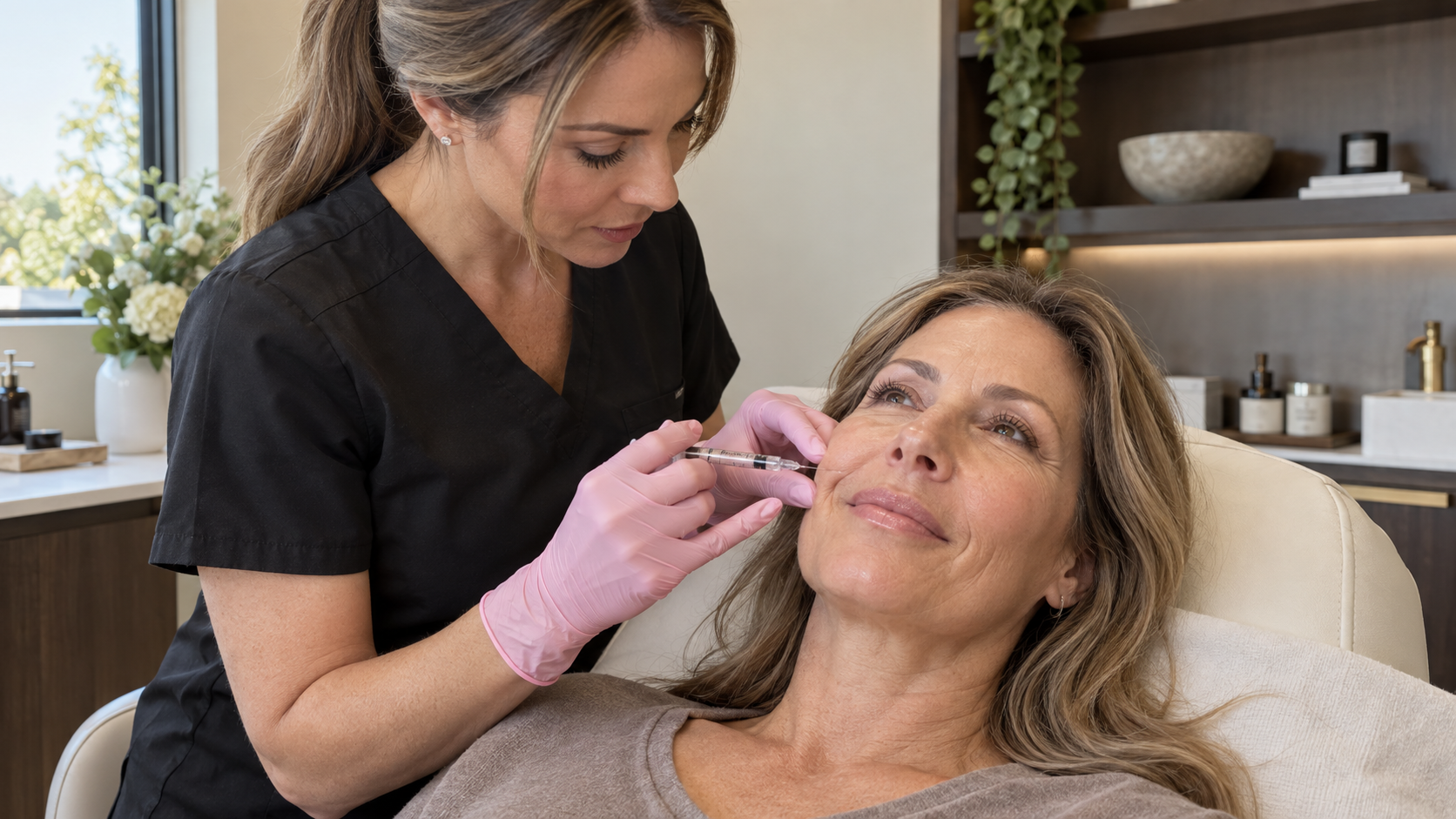
AlluraDerm offers a professional TCA chemical peel for appropriate candidates in Albuquerque. Because treatment intensity can vary, your provider’s specific recovery instructions should take priority over a generic day-by-day timeline found online.
Jump To:
- TLDR Quick Guide
- What Is a TCA Chemical Peel?
- What Skin Concerns Can a TCA Peel Address?
- How Long Is TCA Peel Recovery Time?
- What Happens Immediately After a TCA Peel?
- What Can You Expect During the First Few Days?
- When Does Peeling Usually Start?
- What Does the Peak Peeling Stage Look Like?
- Why You Should Never Pick Peeling Skin
- Does More Peeling Mean Better Results?
- What Happens After the Visible Peeling Stops?
- Why Sun Protection Is Critical After a TCA Peel
- Can You Wear Makeup After a TCA Peel?
- Can You Exercise After a TCA Peel?
- What Skincare Should You Use During Recovery?
- Which Skincare Ingredients May Need to Be Paused?
- How Should You Wash Your Face After a Peel?
- Can You Moisturize Peeling Skin?
- Why Can Skin Look Worse Before It Looks Better?
- Can TCA Peels Help With Acne Scars?
- TCA Peel vs Laser Resurfacing
- TCA Peel vs a Medical-Grade Facial
- How Deep Should a TCA Peel Be?
- Does Skin Type Affect TCA Peel Recovery?
- Can You Get a TCA Peel With Active Acne?
- How Far Before an Event Should You Schedule a TCA Peel?
- When Can You Resume Your Normal Skincare Routine?
- What Can Delay TCA Peel Recovery?
- What Is Not Normal After a TCA Peel?
- Can You Speed Up TCA Peel Recovery?
- How Often Can You Get a TCA Peel?
- How to Plan a TCA Peel in Albuquerque
- How AlluraDerm Approaches TCA Peel Recovery
- Key Takeaways
- Frequently Asked Questions
TLDR Quick Guide
What to Expect During TCA Peel Recovery
- TCA peel recovery time varies according to peel depth, formulation, skin characteristics, and individual healing.
- Redness, warmth, tightness, dryness, flaking, and peeling can occur after treatment.
- The skin may initially feel tighter before visible peeling begins.
- More noticeable peeling often develops several days after treatment rather than immediately.
- Many patients experience the most visible recovery during approximately the first week.
- Not everyone peels in exactly the same way.
- More visible peeling does not automatically mean a better result.
- Do not pull, pick, scrub, or peel away shedding skin.
- Use only the skincare products recommended for your recovery period.
- Temporarily pause irritating or exfoliating ingredients when instructed.
- Keep the skin appropriately moisturized according to aftercare guidance.
- Sun protection is particularly important after a peel.
- Avoid intentional tanning while the skin is healing.
- Heat and strenuous exercise may need to be limited during early recovery depending on provider instructions.
- Do not schedule another aggressive treatment simply because visible peeling has stopped.
- Fresh skin may remain more sensitive after the obvious peeling stage.
- Temporary pinkness or sensitivity can outlast visible flaking.
- Plan important events around the expected recovery period rather than immediately after treatment.
- Contact your provider if the skin becomes increasingly painful or develops symptoms outside your expected recovery instructions.
- A consultation can help determine whether a TCA peel is appropriate for your skin and how much downtime to expect.
What Is a TCA Chemical Peel?
TCA Creates Controlled Chemical Exfoliation
A TCA peel uses trichloroacetic acid to create a controlled chemical effect within the treated skin.
Chemical peels can vary considerably in depth. Some are relatively superficial, while stronger approaches produce a more substantial skin response and correspondingly greater downtime.
That distinction explains why searching for one universal TCA peel recovery timeline can be misleading.
Two people may both say they received a “TCA peel” while having different treatment strengths, application techniques, treatment areas, and individual responses.
A professional consultation should therefore determine both treatment suitability and expected recovery.
What Skin Concerns Can a TCA Peel Address?
Treatment Is Often Chosen for Texture and Tone Concerns
Chemical peels can be considered for several aesthetic concerns.
Depending on the patient and treatment plan, these may include:
- Uneven skin tone
- Sun-related discoloration
- Rough texture
- Fine lines
- Certain pigmentation concerns
- Acne-related marks
- Certain superficial acne scars
- Dull-looking skin
- Signs of photoageing
AlluraDerm also offers several other treatments for uneven skin tone, which matters because a TCA peel is not automatically the best treatment for every pigmentation or texture concern.
The appropriate choice depends on what is causing the visible problem as well as the person’s skin characteristics.
How Long Is TCA Peel Recovery Time?
Expect the Most Visible Recovery During the Early Period
There is no single number that applies to every TCA peel.
With an appropriately selected peel, patients may experience redness and tightness initially, followed by dryness, flaking, or more noticeable peeling over the following days. Many people find that the most socially noticeable part of recovery occurs within roughly the first week, although deeper or stronger treatment can require longer.
The skin can also continue recovering after the obvious peeling has ended.
That distinction is important.
Looking recovered and being completely through the post-treatment recovery period are not necessarily the same thing.
Freshly revealed skin may remain sensitive and require careful sun protection and gentle skincare even when you are no longer visibly peeling.
What Happens Immediately After a TCA Peel?
The Skin May Look Red or Feel Tight
Immediately following treatment, the skin can look and feel different from normal.
Depending on the peel, patients may notice:
- Redness
- Warmth
- Tightness
- Sensitivity
- Dryness
- A change in skin appearance
The treatment area may not begin dramatically peeling before you leave the clinic.
That sometimes surprises first-time patients.
Chemical-peel recovery develops over time, so the visible response over the next several days is usually more relevant than how much peeling is present immediately after treatment.
Follow the aftercare instructions provided rather than trying to encourage peeling yourself.
What Can You Expect During the First Few Days?
Tightness and Dryness May Become More Noticeable
During the early recovery period, the treated skin may begin to feel progressively drier or tighter.
Some people describe a sensation similar to having unusually dry skin.
The surface may start looking different before obvious shedding begins. Pigmented areas can also temporarily appear more noticeable as the treated surface changes.
This stage can tempt patients to scrub or exfoliate because the skin feels rough.
Avoid doing so unless specifically directed by your provider.
The treatment has already created an exfoliating process. Adding physical scrubs, acids, or other aggressive products can unnecessarily irritate recovering skin.
When Does Peeling Usually Start?
Visible Shedding May Be Delayed
One of the biggest misconceptions about chemical peels is that the skin must start shedding immediately.
It often does not.
Visible flaking or peeling can develop several days after treatment as the treated surface progresses through its response.
The exact timing varies.
Some people experience fine flaking. Others notice larger areas of visible peeling depending on treatment intensity and individual response.
Neither pattern should become a competition.
The objective of treatment is improvement in the intended skin concern, not producing the most dramatic photograph of peeling skin.
What Does the Peak Peeling Stage Look Like?
This Is Often the Most Noticeable Part of Recovery
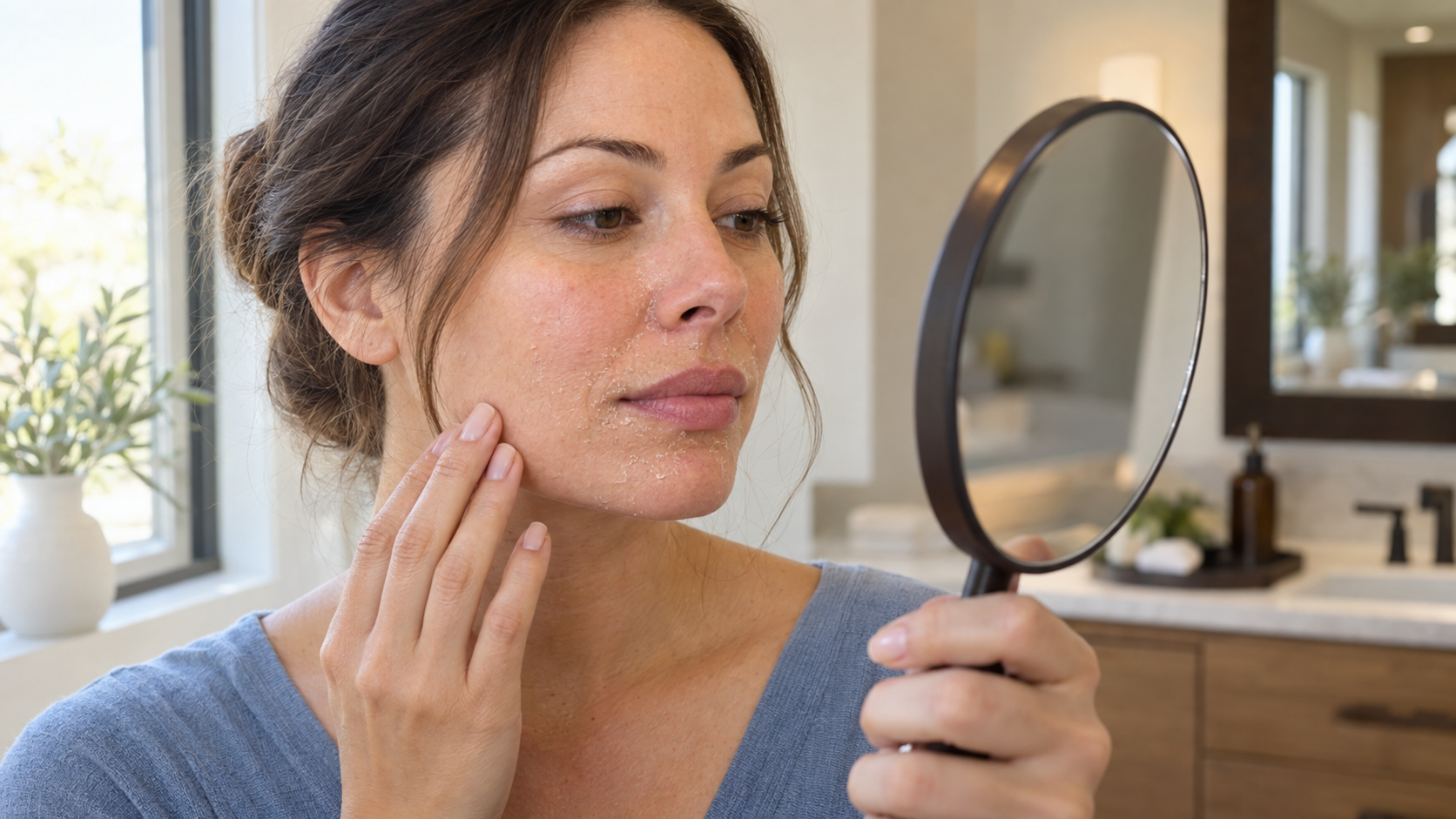
Once visible peeling develops, the skin can look dry, flaky, or uneven as different areas shed at different times.
The mouth, nose, chin, cheeks, and forehead may not all peel simultaneously.
This can make the skin look patchy for several days.
It may be inconvenient, but trying to make the process look more even by pulling away loose skin is not recommended.
Allow shedding skin to separate naturally.
Your provider can tell you which cleansers, moisturizers, and other products are appropriate during this stage.
Why You Should Never Pick Peeling Skin
Pulling Skin Off Can Interfere With Recovery
When a visible flap of skin appears, pulling it away can be extremely tempting.
Resist the temptation.
Skin that looks ready to come off may still be attached to areas underneath. Picking or aggressively removing it can irritate the treated skin and potentially contribute to unwanted complications such as prolonged redness, discoloration, or other healing problems.
Do not use abrasive washcloths or facial scrubs to accelerate the process either.
Chemical-peel recovery is one situation where patience is part of aftercare.
Does More Peeling Mean Better Results?
Visible Shedding Is Not a Scorecard
No.
A dramatic peel is not automatically more effective than a less visually obvious one.
Treatment success should be evaluated according to the original concern, appropriate treatment depth, healing, and eventual skin response.
Trying to chase more peeling can encourage people to use treatments that are unnecessarily aggressive for their skin.
It can also create unrealistic expectations when comparing results online.
The safest treatment is not necessarily the one that creates the most downtime.
It is the one appropriately selected for the patient’s skin and goals.
What Happens After the Visible Peeling Stops?
Newly Revealed Skin Still Needs Care
Once most flaking has stopped, patients may feel as though recovery is finished.
The skin may look smoother and fresher, but it can still be more sensitive than usual.
Temporary pinkness, dryness, or sensitivity may remain depending on the treatment.
This is not the time to immediately restart every strong skincare product in your bathroom.
Follow your provider’s instructions regarding when to reintroduce retinoids, acids, exfoliants, acne treatments, or other active ingredients.
A gradual return to your normal routine may be more appropriate.
Why Sun Protection Is Critical After a TCA Peel
Recovering Skin Needs Protection From UV Exposure
Sun protection is important every day, but it becomes particularly important after procedures that intentionally affect the skin surface.
Newly treated skin can be more vulnerable during recovery.
Unprotected UV exposure can undermine the goals of treating pigmentation or photoageing and may increase the risk of unwanted pigment changes in susceptible individuals.
This deserves particular attention in Albuquerque, where strong sunlight can be part of everyday life throughout much of the year.
Follow your provider’s recommendations for broad-spectrum sunscreen and physical protection such as hats and shade.
Avoid intentional tanning while the skin is recovering.
Can You Wear Makeup After a TCA Peel?
Timing Depends on Your Peel and Recovery
Patients often want to know when they can cover redness or peeling with makeup.
There is no universal answer that should override the instructions given after your specific treatment.
Applying cosmetics too early may irritate recovering skin or interfere with appropriate post-procedure care.
Even after makeup is permitted, heavily applying foundation over actively peeling skin may emphasize texture rather than hide it.
If you have an important event coming up, planning the peel well in advance is usually better than relying on makeup to disguise active recovery.
Can You Exercise After a TCA Peel?
Heat and Sweat Can Matter During Early Recovery
Strenuous exercise raises body temperature and increases sweating.
Depending on treatment depth and your provider’s protocol, you may be instructed to limit strenuous exercise, saunas, steam rooms, hot tubs, or other heat exposure during the initial recovery period.
Follow the instructions provided for your treatment.
The point is not to avoid physical activity indefinitely.
It is to avoid unnecessary heat, friction, or irritation while the skin is particularly reactive.
What Skincare Should You Use During Recovery?
Keep the Routine Simple Unless Directed Otherwise
After a chemical peel, more skincare is not necessarily better skincare.
The post-treatment routine commonly focuses on gentle cleansing, appropriate moisturization, and sun protection, but your provider should specify what is appropriate for your peel.
Avoid experimenting with new active ingredients during recovery.
Products that normally feel comfortable can sometimes be irritating when the skin barrier is temporarily more sensitive.
Your post-peel skincare routine should support recovery rather than trying to create additional exfoliation.
Which Skincare Ingredients May Need to Be Paused?
Strong Actives Can Be Too Much for Recovering Skin
Depending on your treatment and professional instructions, you may need to temporarily avoid products such as:
- Retinoids
- Alpha hydroxy acids
- Beta hydroxy acids
- Exfoliating scrubs
- Strong acne treatments
- Certain brightening ingredients
- Other potentially irritating actives
The exact list and restart timing depend on your skin and treatment.
Do not assume that because an ingredient is normally beneficial, it is automatically appropriate immediately after a peel.
The skin’s needs during recovery are different from its normal maintenance needs.
How Should You Wash Your Face After a Peel?
Gentle Technique Matters
Cleansing should not become another method of exfoliation.
Use the products and frequency recommended by your provider.
Avoid aggressive rubbing, scrubbing, facial brushes, or picking at loose skin.
When drying the face, use a gentle approach rather than rubbing vigorously with a towel.
Small choices like these can help reduce unnecessary irritation during the most sensitive part of recovery.
Can You Moisturize Peeling Skin?
Appropriate Moisture Can Support Comfort
Recovering skin can feel dry and tight, so appropriate moisturization is often part of post-peel care.
However, use products recommended or approved by your provider.
This is not an ideal time to test a fragranced cream, new botanical treatment, strong active product, or complicated skincare routine.
A bland, recovery-appropriate moisturizer may be preferable depending on your specific aftercare plan.
If a recommended product unexpectedly causes significant burning, swelling, or another concerning reaction, contact your provider.
Why Can Skin Look Worse Before It Looks Better?
The Recovery Phase Is Not the Final Result
A TCA peel intentionally produces a visible skin response.
During that process, the skin may temporarily look:
- Red
- Dry
- Rough
- Flaky
- Patchy
- More pigmented in certain areas
For someone receiving a peel to improve appearance, this can initially feel counterintuitive.
The important point is that the recovery stage should not be confused with the final cosmetic result.
Allow the skin to complete the expected healing process before evaluating whether tone or texture has improved.
Can TCA Peels Help With Acne Scars?
Scar Type Influences Treatment Choice
Chemical peels can be considered for certain acne-related concerns, but “acne scars” is a broad category.
Some people are primarily concerned with post-acne discoloration.
Others have shallow textural irregularities.
Still others have deeper depressed scars or raised scars that may require a different approach.
AlluraDerm offers multiple options for acne and acne scars, so treatment should be selected according to the actual type of concern rather than assuming a TCA peel is appropriate for every scar.
This is where consultation becomes especially valuable.
TCA Peel vs Laser Resurfacing
Both Can Address Skin Concerns Through Different Approaches
Patients considering a TCA peel may also encounter laser resurfacing during their research.
Both categories can be used for certain concerns involving tone, texture, photoageing, and scarring, but they work differently.
The appropriate choice can depend on:
- Primary skin concern
- Skin characteristics
- Treatment depth needed
- Desired downtime
- Previous treatments
- Pigmentation considerations
- Medical history
- Time of year and sun exposure
- Individual goals
One treatment is not automatically superior.
For some patients, a chemical peel may fit the goal. For others, laser treatment or another modality may be more appropriate.
TCA Peel vs a Medical-Grade Facial
The Expected Downtime Is Very Different
A facial and a TCA peel should not be treated as interchangeable simply because both involve professional skincare.
Medical-grade facials can address concerns such as hydration, congestion, texture, or general skin maintenance depending on the treatment selected.
A TCA peel intentionally creates a stronger exfoliating response and can involve visible downtime.
This distinction matters when planning around events.
Someone looking for low-downtime skin maintenance shortly before an important occasion may need a very different treatment from someone intentionally scheduling a corrective peel with time to recover.
How Deep Should a TCA Peel Be?
Stronger Is Not Automatically Better
Patients sometimes assume that a deeper peel must produce a better result.
That is not a safe assumption.
Greater treatment intensity can also mean greater recovery demands and potentially greater risk.
The appropriate peel depth should reflect the skin concern, individual skin characteristics, medical history, previous treatment experience, and provider assessment.
A responsible treatment plan aims for an appropriate response rather than the strongest possible response.
Does Skin Type Affect TCA Peel Recovery?
Individual Skin Characteristics Matter
Yes, individual skin characteristics can influence both treatment selection and recovery considerations.
People differ in sensitivity, pigmentation tendencies, baseline dryness, oil production, history of irritation, previous procedures, and other factors.
Certain patients may require particularly careful planning because post-inflammatory pigmentation can be a concern after skin injury or inflammation.
A provider should evaluate these factors before choosing the treatment.
This is another reason at-home experimentation with professional-strength peeling agents can be risky.
Can You Get a TCA Peel With Active Acne?
The Type and Severity of Acne Matter
Acne does not automatically rule out every chemical peel, but treatment selection should be individualized.
Active inflammation, open lesions, current medications, skincare products, infection risk, and the type of acne all need consideration.
Some chemical peels may be incorporated into professional acne treatment plans, while other situations may call for a different approach.
Do not attempt to aggressively peel active acne at home.
A professional can determine whether a chemical peel is appropriate now or whether another treatment should come first.
How Far Before an Event Should You Schedule a TCA Peel?
Give Yourself More Time Than the Minimum Visible Downtime
A TCA peel should generally not be treated as a last-minute event facial.
Even if the most noticeable peeling occurs within approximately the first week for many patients, skin may remain pink, dry, sensitive, or unpredictable after the obvious flaking has stopped.
Important events deserve a buffer.
Your provider can recommend appropriate scheduling based on the treatment strength, your skin history, and the event date.
First-time patients may especially benefit from avoiding an aggressive treatment immediately before an occasion when appearance cannot be left to chance.
When Can You Resume Your Normal Skincare Routine?
Restart Active Products According to Professional Guidance
The fact that your skin has stopped peeling does not necessarily mean it is ready for every normal product.
Reintroducing retinoids, acids, exfoliants, or other active ingredients too quickly may cause unnecessary irritation.
Follow your post-treatment instructions.
If the skin remains unusually sensitive, communicate that before resuming aggressive products.
The objective is not to restart the routine as quickly as possible.
It is to allow recovery to progress appropriately while protecting the results of treatment.
What Can Delay TCA Peel Recovery?
Irritation During Healing Can Complicate the Process
Recovery varies naturally, but certain behaviors can make the healing period more difficult.
Potential problems include:
- Picking peeling skin
- Scrubbing the face
- Using irritating skincare too soon
- Excessive sun exposure
- Intentional tanning
- Ignoring aftercare instructions
- Applying unsuitable products
- Excessive heat or friction during sensitive stages
- Scheduling additional aggressive treatments too soon
Individual medical and skin factors can also influence recovery.
When healing seems substantially different from the expectations provided by your clinician, contact the practice rather than trying to fix the problem with additional products.
What Is Not Normal After a TCA Peel?
Know When to Contact Your Provider
Expected recovery can include redness, tightness, dryness, flaking, peeling, and temporary sensitivity according to the treatment performed.
Symptoms that are severe, progressively worsening, or substantially outside the recovery pattern explained by your provider deserve attention.
Contact your treatment provider promptly if you develop concerning pain, significant swelling, blistering, drainage, signs of infection, extensive unexpected discoloration, or another reaction that worries you.
Severe allergic symptoms or other medical emergencies require appropriate emergency care.
Do not rely on social-media photos to decide whether a concerning reaction is “normal.”
Can You Speed Up TCA Peel Recovery?
Faster Is Not Necessarily Better
Patients naturally want to move through the peeling stage quickly.
But recovery is not something to force.
Picking, exfoliating, scrubbing, steaming, or applying strong products in an attempt to speed shedding can create additional irritation.
The better strategy is to follow aftercare carefully and allow the skin to progress at its own pace.
Your provider can recommend ways to keep the skin comfortable without disrupting the intended recovery process.
How Often Can You Get a TCA Peel?
Treatment Frequency Should Be Individualized
Chemical peels are not procedures to repeat whenever the skin looks dull.
The appropriate interval depends on peel intensity, treatment goals, skin response, previous procedures, and the broader skincare plan.
Some patients may benefit from a series of appropriately spaced treatments.
Others may use a TCA peel less frequently while maintaining results with skincare or other aesthetic procedures.
The skin should have adequate time to recover before another significant treatment is considered.
How to Plan a TCA Peel in Albuquerque
Sun Exposure Should Be Part of Your Treatment Calendar
Albuquerque’s sunny climate makes post-procedure planning particularly important.
Patients should consider their normal outdoor activities, travel, sports, work, upcoming holidays, and events when deciding when to schedule a peel.
Someone who spends significant time outdoors may need to be especially deliberate about physical sun protection and treatment timing.
This does not necessarily mean chemical peels can only be performed during one season.
It means sun exposure and aftercare need to be considered as part of the treatment plan.
How AlluraDerm Approaches TCA Peel Recovery
Treatment Planning Should Start Before the Peel
Good recovery planning begins before treatment is applied.
A consultation gives the provider an opportunity to evaluate the concern, discuss previous treatments and skincare, consider medical history, explain expected downtime, and determine whether a TCA peel is appropriate.
It also gives the patient a chance to plan around work, travel, exercise, sun exposure, and important events.
After treatment, following individualized instructions becomes more important than following a generic online calendar.
A patient whose skin is recovering differently from what was expected should contact the practice rather than assuming every reaction is simply part of peeling.
Key Takeaways
Give Your Skin Time to Complete the Recovery Process
- TCA peel recovery time varies according to treatment depth, formulation, skin characteristics, treatment area, and individual response.
- TCA stands for trichloroacetic acid.
- A professional TCA peel creates controlled chemical exfoliation.
- Redness, warmth, tightness, dryness, flaking, and peeling may occur during recovery.
- Visible peeling does not necessarily begin immediately after treatment.
- The most noticeable recovery commonly occurs during the first week, although timelines vary.
- Stronger or deeper treatments may require longer recovery.
- Skin may continue settling after visible peeling stops.
- More dramatic peeling does not automatically mean better results.
- Never deliberately pull or pick shedding skin.
- Avoid abrasive scrubs and unnecessary exfoliation during recovery.
- Follow provider instructions regarding cleansing and moisturizing.
- Strong active skincare ingredients may need to be temporarily paused.
- Reintroduce retinoids, acids, and other actives according to professional guidance.
- Sun protection is especially important after a peel.
- Albuquerque’s strong sunlight should be considered when planning treatment.
- Avoid intentional tanning during recovery.
- Makeup timing depends on the specific peel and provider instructions.
- Heat, strenuous exercise, and sweating may need to be limited temporarily.
- A TCA peel is not the same as a low-downtime facial.
- Chemical peels can be considered for certain concerns involving tone, texture, fine lines, photoageing, and acne-related changes.
- Different types of acne scars may require different treatments.
- TCA peels and laser resurfacing work differently and should be selected according to the individual concern.
- Stronger treatment is not automatically more appropriate.
- Individual skin characteristics can influence both treatment choice and recovery.
- Allow a reasonable buffer before weddings, photographs, vacations, or other important events.
- Do not rush into another aggressive skin treatment immediately after visible peeling ends.
- Contact your provider when symptoms are substantially different from the expected recovery pattern.
- Professional consultation helps establish realistic downtime before treatment begins.
- Patience, gentle aftercare, and sun protection are central to a smoother recovery.
Frequently Asked Questions
How long is the typical TCA peel recovery time?
The most visible TCA peel recovery often occurs during approximately the first week, but the exact timeline varies with peel depth, skin characteristics, treatment area, and individual response. Redness, tightness, dryness, flaking, or peeling can develop during this period, and some residual sensitivity may remain after visible shedding stops. Your provider can give you a more individualized estimate based on the specific peel being performed.
When does your face start peeling after a TCA peel?
Visible peeling may begin several days after treatment rather than immediately after the peel is applied. The timing and amount of shedding vary, and some people experience finer flaking while others have more obvious peeling. Do not try to accelerate the process by picking, scrubbing, or pulling away shedding skin.
Can I wear makeup while my TCA peel is healing?
The appropriate time to resume makeup depends on the treatment depth, condition of the skin, and aftercare protocol provided by your clinician. Applying cosmetics too early may irritate recovering skin, so follow the instructions given for your specific peel. If you have an important event, schedule the treatment with enough recovery time rather than depending on makeup to cover active peeling.
What should I avoid during TCA peel recovery?
Avoid picking or scrubbing peeling skin, intentional tanning, unnecessary sun exposure, and skincare ingredients your provider has instructed you to pause. You may also need to temporarily limit strenuous exercise, excessive heat, or other activities that could irritate the skin depending on your treatment protocol. Follow your individualized aftercare instructions because recommendations can vary according to peel intensity and skin response.
How do I know if my skin is not healing normally after a TCA peel?
Expected recovery can include temporary redness, tightness, dryness, sensitivity, flaking, and peeling according to the treatment performed. Increasing pain, significant swelling, blistering, drainage, signs of infection, extensive unexpected discoloration, or another reaction substantially outside the expected recovery pattern should prompt contact with your treatment provider. Seek appropriate emergency care for severe allergic symptoms or another medical emergency.