You have completed a professional chemical peel, followed the initial aftercare instructions, and now you are watching your skin closely. But several hours—or even a full day—have passed without visible peeling. Does that mean the treatment did not work?
Not necessarily. The chemical peel peeling timeline varies depending on the type and depth of peel, the ingredients used, your skin characteristics, the treatment area, and how your skin responds. Some people experience light flaking, others develop more noticeable peeling, and gentler peels may cause little visible shedding at all.
When peeling does occur, it commonly does not begin immediately after you leave the treatment room. The skin may first feel tight, dry, sensitive, or look slightly red before visible flaking develops over the following days.
AlluraDerm offers several professional peel options with different treatment intensities. Understanding what happens during recovery can help you avoid a common mistake: assuming that more visible peeling automatically means a more successful treatment.
Jump To:
- TLDR Quick Guide
- What Happens to Your Skin During a Chemical Peel?
- When Does Skin Start Peeling After a Chemical Peel?
- What Happens During the First 24 Hours?
- What Can Happen on Days Two and Three?
- What Happens Around Days Three Through Five?
- How Long Does Chemical Peel Peeling Last?
- Do All Chemical Peels Make Your Skin Peel?
- Why Might You Not Peel After a Chemical Peel?
- How Does Peel Depth Affect the Peeling Timeline?
- What Should Peeling Skin Look and Feel Like?
- Why You Should Never Pick Peeling Skin
- How Should You Wash Your Face While It Is Peeling?
- Should You Moisturize While Your Skin Is Peeling?
- What Skincare Ingredients Should You Avoid After a Peel?
- Why Is Sunscreen So Important After a Chemical Peel?
- Can You Wear Makeup While Your Skin Is Peeling?
- Can You Exercise After a Chemical Peel?
- What If Your Skin Still Hasn't Peeled After Three Days?
- When Does Skin Look Better After Peeling Stops?
- How Often Can You Get Professional Chemical Peels?
- How to Plan a Chemical Peel Before an Important Event
- How Do You Choose the Right Chemical Peel?
- Key Takeaways
- Frequently Asked Questions
TLDR Quick Guide
Chemical Peel Peeling Timeline at a Glance
- Visible peeling usually does not begin immediately after a professional chemical peel.
- During the first day, skin may feel tight, dry, sensitive, or appear mildly red.
- With many superficial-to-medium peels, flaking may begin approximately two to three days after treatment.
- Peeling may become more noticeable around areas with frequent movement, such as around the mouth.
- The amount of visible peeling depends significantly on the peel used and your individual response.
- Gentler peels may produce very little visible flaking.
- A lack of dramatic peeling does not automatically mean the treatment was ineffective.
- More intensive peels can involve a longer and more noticeable recovery period.
- Never pull, pick, scrub, or manually remove peeling skin.
- Use only the skincare products recommended or approved by your provider during recovery.
- Moisturizer can help support comfort while the skin barrier recovers.
- Daily sun protection is particularly important after a peel.
- Avoid introducing harsh exfoliants, retinoids, or irritating active ingredients until your provider says they can be resumed.
- Avoid scheduling an unfamiliar peel immediately before an important event.
- Contact your provider if you experience an unexpected or concerning reaction.
- Seek medical attention for severe swelling, blistering, intense or worsening pain, signs of infection, or other serious symptoms.
What Happens to Your Skin During a Chemical Peel?
Chemical Peels Create Controlled Exfoliation
A professional chemical peel applies a carefully selected chemical solution to the skin to produce controlled exfoliation. Depending on the formulation and treatment depth, the peel can affect different levels of the skin.
As the treated skin responds, damaged or superficial cells may gradually shed. This process can improve the appearance of concerns such as uneven texture, dullness, certain types of pigmentation, fine lines, or acne-related concerns, depending on the peel selected.
However, not every chemical peel works at the same depth.
A light peel designed primarily for refreshing the skin should not be expected to produce the same recovery experience as a stronger treatment. This is why understanding which peel you received is essential when interpreting your recovery.
Peeling Is Only One Part of the Process
The word “peel” can create the impression that sheets of skin must visibly shed for the procedure to work.
That is not always the case.
Some professional peels create relatively subtle exfoliation that may appear as dryness or fine flaking rather than obvious peeling. The clinical goal is controlled treatment appropriate for your skin—not producing the greatest possible amount of shedding.
When Does Skin Start Peeling After a Chemical Peel?
Days Two to Three Are a Common Starting Point
For many professional peels that produce visible shedding, peeling may begin around the second or third day after treatment.
Before that point, your skin may simply feel tighter or drier than usual. It may also appear slightly red or feel more sensitive.
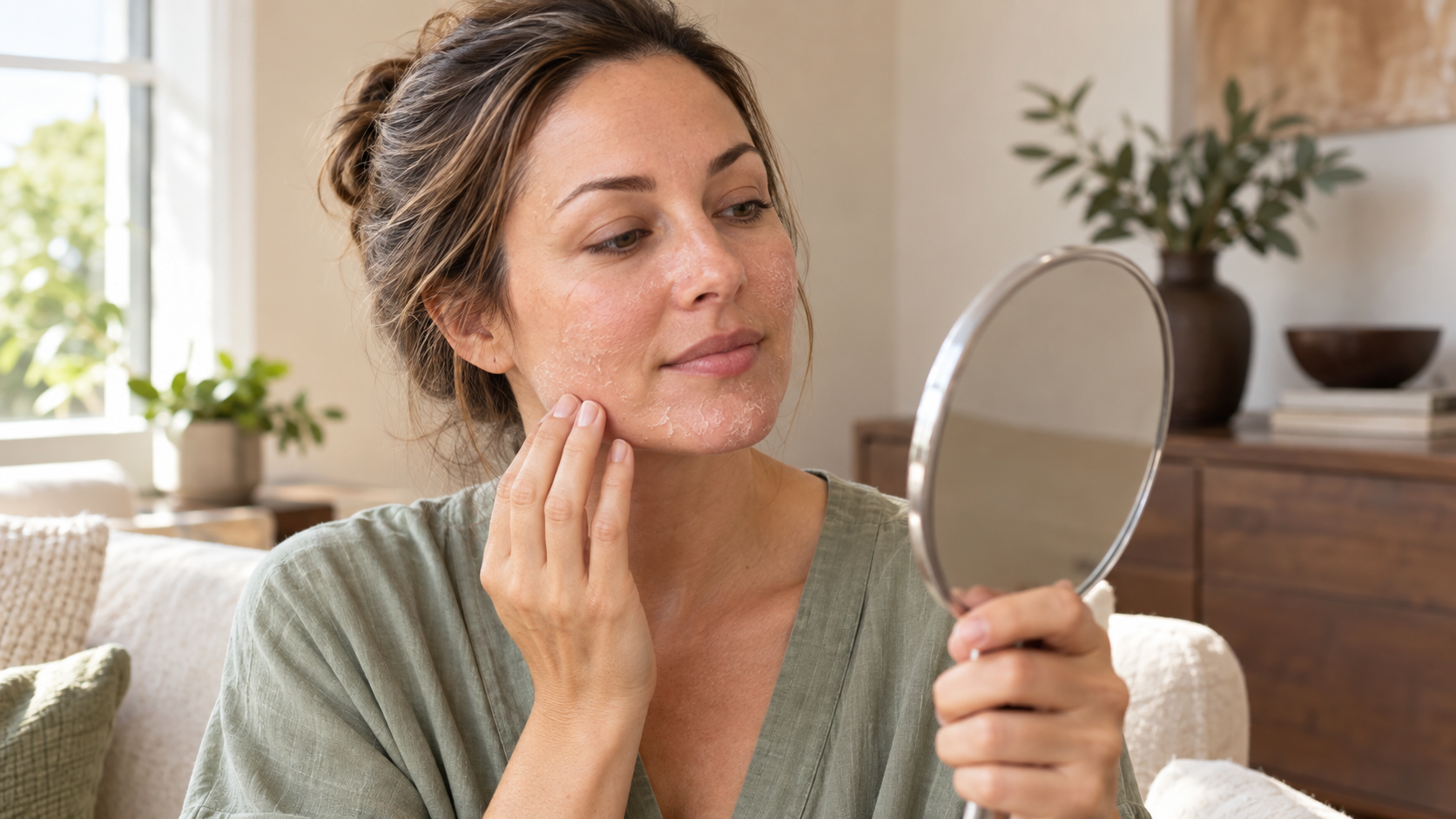
You might first notice tiny flakes rather than large pieces of skin.
The area around the mouth can sometimes become noticeable first because talking, eating, smiling, and other facial movements continually flex the skin.
Your Exact Timeline May Be Different
The chemical peel peeling timeline is not identical for every patient.
Your experience may be influenced by:
- Type of chemical peel
- Strength and concentration
- Number of layers or treatment passes
- Treatment area
- Skin type and condition
- Previous peel experience
- Existing skincare routine
- Individual skin response
- Provider-directed preparation
- Post-treatment care
Rather than expecting your recovery to match someone else’s day-by-day photographs, follow the expectations provided for your specific treatment.
What Happens During the First 24 Hours?
Your Skin May Feel Tight Before It Peels
Immediately after treatment, the skin may not look dramatically different.
Depending on the peel, you may experience temporary redness, warmth, sensitivity, dryness, or tightness. Some people describe the skin as feeling slightly taut.
This does not mean peeling should begin immediately.
The exfoliation process can continue developing beneath what you see on the surface, so patience during the first day is important.
Avoid Trying to “Start” the Peeling
If nothing is happening yet, do not attempt to speed up the process.
Scrubbing, exfoliating, using an at-home acid, applying a retinoid, or rubbing the skin aggressively can disrupt recovery and increase irritation.
The purpose of professional treatment is controlled exfoliation.
Adding uncontrolled exfoliation afterward can work against that goal.
What Can Happen on Days Two and Three?
Fine Flaking May Begin
This is often when patients first notice visible signs of shedding after peels expected to produce peeling.
Skin may feel drier and slightly rougher. Fine flakes may become visible, particularly around areas that move frequently.
Do not be surprised if the peeling looks less dramatic than expected.
A fine, almost powdery flaking pattern can still occur during recovery.
Some Areas May Peel Before Others
Your entire face does not necessarily begin peeling simultaneously.
You may notice flaking around the mouth, chin, nose, or other areas before the cheeks or forehead.
Differences across the face do not automatically indicate uneven treatment.
Skin thickness, oil production, movement, treatment application, and individual response can influence what you observe.
What Happens Around Days Three Through Five?
Peeling May Become More Noticeable
For a peel expected to produce visible shedding, days three through five may bring more obvious flaking.
The skin can look dry, and small sections may begin lifting naturally.
This is where patience becomes especially important.
Loose skin can be tempting to remove, particularly when a visible flake is hanging near the mouth or nose. Resist the urge to pull it away.
Let Skin Shed Naturally
Picking peeling skin can remove tissue before it is ready to detach.
That may increase irritation and potentially contribute to prolonged redness, discoloration, or other complications.
Avoid using scrubs, exfoliating brushes, facial cleansing devices, or abrasive towels to remove flakes.
Cleanse and moisturize according to your provider’s instructions and allow shedding to occur naturally.
How Long Does Chemical Peel Peeling Last?
Many Lighter Recoveries Resolve Within Several Days
With superficial treatments, visible dryness or flaking may last only a few days.
The skin may progressively look smoother as shedding subsides.
However, stronger treatments can involve a longer recovery.
You should therefore base your expectations on the specific peel performed rather than a universal recovery calendar.
Stronger Peels Can Require More Downtime
The deeper the controlled treatment reaches, the more involved recovery may become.
More intensive chemical peels can produce greater redness, sensitivity, peeling, and downtime than very superficial treatments.
AlluraDerm offers options ranging from lighter treatments to stronger professional peels, including a TCA chemical peel for appropriately selected patients.
A professional consultation is particularly important when considering more intensive resurfacing because treatment depth must be matched to your skin, goals, medical history, and ability to accommodate downtime.
Do All Chemical Peels Make Your Skin Peel?
No—Visible Peeling Is Not Guaranteed
This is one of the most important facts to understand before treatment.
Some chemical peels can work without producing dramatic visible shedding.
A gentle peel may cause mild dryness or virtually no noticeable flaking. Another treatment may cause several days of obvious peeling.
Neither response should be judged solely by how much skin ends up on your bathroom counter.
More Peeling Does Not Automatically Mean Better Results
Patients sometimes assume:
More peeling = stronger treatment = better result.
That is an oversimplification.
An effective treatment should be appropriate for your skin and aesthetic concern. Making a peel unnecessarily aggressive simply to produce visible shedding can increase downtime and unwanted reactions without necessarily making it the right treatment for you.
The goal is controlled skin renewal, not maximum peeling.
Why Might You Not Peel After a Chemical Peel?
You May Have Received a Gentle Peel
Some professional peels are intentionally formulated to provide lighter exfoliation with minimal downtime.
AlluraDerm’s Illuminize chemical peel is an example of a treatment intended for patients seeking a gentler resurfacing experience.
With this type of treatment, expecting several days of dramatic peeling may be unrealistic.
Always ask your provider how much visible exfoliation is typically expected from the particular peel selected for you.
Individual Responses Vary
Even when two patients receive similar treatments, their visible recovery may differ.
Skin condition, sensitivity, oiliness, previous treatments, skincare history, and individual response can influence how noticeable the peeling becomes.
This makes social-media comparisons particularly misleading.
Your friend’s dramatic day-four peeling does not establish what your skin should do.
How Does Peel Depth Affect the Peeling Timeline?
Superficial Peels Usually Have Less Downtime
Superficial chemical peels primarily affect the outermost portions of the skin.
They are commonly chosen when patients want relatively mild exfoliation and a shorter recovery period.
Depending on the formulation, you may experience dryness, mild flaking, or limited visible peeling.
These treatments can be useful when extensive downtime does not fit your schedule.
More Intensive Peels Require More Recovery Planning
Medium-depth and stronger peels can create more substantial resurfacing.
The peeling period may consequently be more visible and prolonged.
That makes treatment timing particularly important.
If you have a wedding, vacation, professional photos, major presentation, or another important event approaching, tell your provider before choosing a peel.
The treatment should fit both your skin goals and your schedule.
What Should Peeling Skin Look and Feel Like?
Dryness and Flaking Can Be Expected
During ordinary recovery from many peeling treatments, skin may become dry, tight, rough, or flaky.
The appearance can temporarily be less polished before fresh-looking skin becomes more visible.
That intermediate phase is one reason professional chemical peels should not be scheduled too close to an important event without understanding the expected downtime.
Follow your provider’s instructions even if your skin looks different from what you anticipated.
Not Every Reaction Should Be Considered Normal
There is a difference between expected exfoliation and a concerning skin reaction.
Severe or increasing pain, extensive blistering, marked swelling, open sores, drainage, signs of infection, or other significant reactions warrant professional attention.
Contact your treatment provider if you are unsure whether your response falls within the expected recovery range.
When symptoms are severe or medically concerning, seek appropriate medical care.
Why You Should Never Pick Peeling Skin
Pulling Skin Can Interrupt Recovery
Few things are more tempting after a chemical peel than removing a piece of loose skin.
Avoid doing it.
The visible edge may be ready to shed while the skin attached underneath is not.
Pulling can prematurely remove skin and expose a more vulnerable surface.
Picking Can Increase the Risk of Discoloration
Unnecessary irritation and inflammation can contribute to unwanted pigmentation changes, particularly in people susceptible to post-inflammatory hyperpigmentation.
This makes gentle aftercare particularly important.
Do not use tweezers, fingernails, facial razors, scrubs, or exfoliating tools to remove peeling skin unless your treating professional has specifically instructed otherwise.
Let the exfoliation process progress naturally.
How Should You Wash Your Face While It Is Peeling?
Keep Cleansing Gentle
Your normal “deep clean” routine may be too aggressive during chemical peel recovery.
Use the cleanser and cleansing schedule recommended by your provider.
Avoid vigorous rubbing.
When drying your face, gently pat rather than aggressively wiping the skin with a towel.
Avoid Hot Water
Very hot water can feel uncomfortable on recently treated skin and may increase irritation.
Use comfortable water temperatures and keep cleansing straightforward.
This is not the time to add facial brushes, exfoliating cloths, cleansing devices, or scrubs.
The peel has already performed the exfoliating step.
Should You Moisturize While Your Skin Is Peeling?
Moisture Can Support Comfort During Recovery
Skin often feels dry or tight as peeling develops.
Using a provider-approved moisturizer can help make the recovery period more comfortable and support the skin barrier.
The exact product matters.
A moisturizer that works perfectly during your normal routine may contain ingredients your provider would prefer you temporarily avoid after a peel.
Follow Your Post-Peel Product Instructions
Professional treatments should include aftercare guidance.
Follow those instructions rather than creating your own recovery routine from social media recommendations.
If you are unsure whether a particular moisturizer, cleanser, sunscreen, serum, or makeup product is appropriate, ask your provider.
A simple recovery routine is often preferable to layering multiple unfamiliar products onto sensitized skin.
What Skincare Ingredients Should You Avoid After a Peel?
Pause Potentially Irritating Actives as Directed
Recently peeled skin may be more sensitive to products you normally tolerate.
Your provider may instruct you to temporarily avoid ingredients or products such as:
- Retinoids
- Exfoliating acids
- Scrubs
- At-home peel products
- Benzoyl peroxide
- Strong acne treatments
- Certain vitamin C formulations
- Other potentially irritating active ingredients
The exact restrictions and timing depend on the peel and your skin.
Do not restart everything automatically because visible peeling has stopped.
Resume Products Gradually
The disappearance of flakes does not always mean your skin barrier has completely returned to its usual condition.
Follow the timeline provided by your aesthetic professional.
When products are reintroduced, doing so gradually can make it easier to identify irritation.
If a product causes significant burning, persistent redness, or another unexpected reaction, stop using it and contact your provider for guidance.
Why Is Sunscreen So Important After a Chemical Peel?
Freshly Treated Skin Needs Careful UV Protection
Chemical exfoliation can temporarily leave skin more vulnerable to environmental exposure.
Sun protection is therefore an essential part of post-peel care.
Use the broad-spectrum sunscreen recommended by your provider and follow instructions regarding reapplication.
Physical sun avoidance measures, such as shade and appropriate hats, may also be useful.
Albuquerque Sun Exposure Matters
Living in Albuquerque makes consistent sun protection particularly relevant.
Strong UV exposure can undermine efforts to improve the appearance of sun damage and can increase concerns about unwanted pigmentation after procedures that temporarily increase skin sensitivity.
A chemical peel should therefore be considered part of a broader skin-care plan rather than an isolated procedure.
Protecting the treated skin after your appointment matters just as much as following instructions during the visible peeling phase.
Can You Wear Makeup While Your Skin Is Peeling?
Timing Depends on the Peel
When makeup can safely be resumed depends on treatment intensity, skin condition, and your provider’s instructions.
Some lighter peels may permit a relatively quick return to makeup.
Stronger peels may require waiting longer.
Applying makeup too soon to irritated or compromised skin may increase discomfort and interfere with recovery.
Flaking Can Make Makeup Look More Noticeable
Even after makeup has been approved, foundation can collect around dry patches.
Trying to scrub those patches away before applying makeup can make matters worse.
If you have an important event, the better solution is usually scheduling your peel far enough in advance rather than trying to conceal active peeling.
Discuss timing during your consultation so your treatment plan fits your calendar.
Can You Exercise After a Chemical Peel?
Heat and Sweat May Irritate Recently Treated Skin
Strenuous exercise raises body temperature and causes sweating.
Depending on the peel, your provider may recommend temporarily avoiding intense workouts, saunas, steam rooms, hot tubs, or other activities that create substantial heat and perspiration.
Follow the restrictions provided for your specific procedure.
Do not assume that advice for a very light peel applies to a more intensive one.
Ask Before Returning to Your Normal Routine
If you train frequently, mention this during your consultation.
Your provider can explain how long you should modify your routine.
Planning ahead is easier than receiving a peel and discovering afterward that your normal workout schedule conflicts with recovery instructions.
Treatment planning should account for real life, not just what happens in the treatment room.
What If Your Skin Still Hasn’t Peeled After Three Days?
Don’t Panic
No visible peeling after three days does not automatically mean something went wrong.
Your peel may have been designed to create mild exfoliation, your response may simply be subtle, or visible shedding may develop later.
Do not apply additional acids or exfoliants to force the process.
If you are concerned, contact your provider and ask what was expected from the treatment you received.
Judge the Treatment by More Than Flakes
The purpose of a chemical peel may be to improve the appearance of texture, tone, dullness, pigmentation, fine lines, or another specific concern.
Visible peeling is a temporary treatment response—not the final aesthetic objective.
Evaluate results over the appropriate timeline recommended for your peel.
Your provider can also determine whether another session, a different peel strength, or another treatment category would better suit your goals.
When Does Skin Look Better After Peeling Stops?
Early Improvements May Become More Noticeable as Flaking Resolves
Once visible peeling subsides, skin may begin looking smoother, brighter, or more even.
The exact improvement depends on the peel and the concern being treated.
Some results may be apparent relatively soon, while others may become more meaningful after a series of appropriately spaced treatments.
Chemical peels should not be expected to permanently erase every pigmentation, texture, acne, or aging concern after one session.
Skin Renewal Continues Beyond the Visible Peeling Stage
The end of flaking is not necessarily the end of the treatment process.
Skin may continue settling after the obvious recovery phase.
Continue following sun-protection and skincare instructions even when your complexion appears back to normal.
Consistent post-treatment care can be an important part of maintaining the improvements you achieve.
How Often Can You Get Professional Chemical Peels?
Frequency Depends on the Treatment
There is no single schedule appropriate for every chemical peel.
A superficial peel may potentially be repeated more frequently than a stronger treatment that requires substantial recovery.
Treatment frequency also depends on your skin, goals, response, current skincare products, and other procedures.
More frequent treatment is not automatically better.
Your Skin Goals Should Determine the Plan
Someone treating occasional dullness may need a very different strategy from a patient concerned about pigmentation, acne-related changes, or more established signs of photoaging.
At AlluraDerm, a medical-grade facial consultation can help determine which facial or peel option fits the patient’s skin condition and goals.
A personalized plan also helps prevent unnecessary overlap between chemical peels and other exfoliating or resurfacing procedures.
How to Plan a Chemical Peel Before an Important Event
Give Yourself More Time Than You Think You Need
If you have never received a particular peel before, avoid scheduling it only a few days before an important event.
You do not yet know exactly how your skin will respond.
Even a peel with a generally predictable recovery range can produce individual variation.
Allowing extra time gives redness, dryness, flaking, and peeling an opportunity to resolve.
Work Backward From the Event Date
Tell your provider when the event occurs and what you want your skin to look like.
They can help determine whether the treatment timing is realistic or whether a gentler option would be more appropriate.
For major events, treatment planning several weeks or months ahead may provide more flexibility for a series of treatments when indicated.
Last-minute aggressive resurfacing is rarely the best strategy for predictable event preparation.
How Do You Choose the Right Chemical Peel?
Start With the Skin Concern, Not the Strongest Peel
The best peel is not necessarily the one that causes the most peeling.
Treatment selection should begin with questions such as:
What concern are you trying to address?
What is your skin type and current condition?
How much downtime can you accommodate?
What products or treatments are you currently using?
Do you have an upcoming event?
Have you previously experienced pigmentation or sensitivity after skin procedures?
Those factors help a professional determine an appropriate approach.
Professional Assessment Matters
Chemical peels differ significantly in formulation, depth, and intended use.
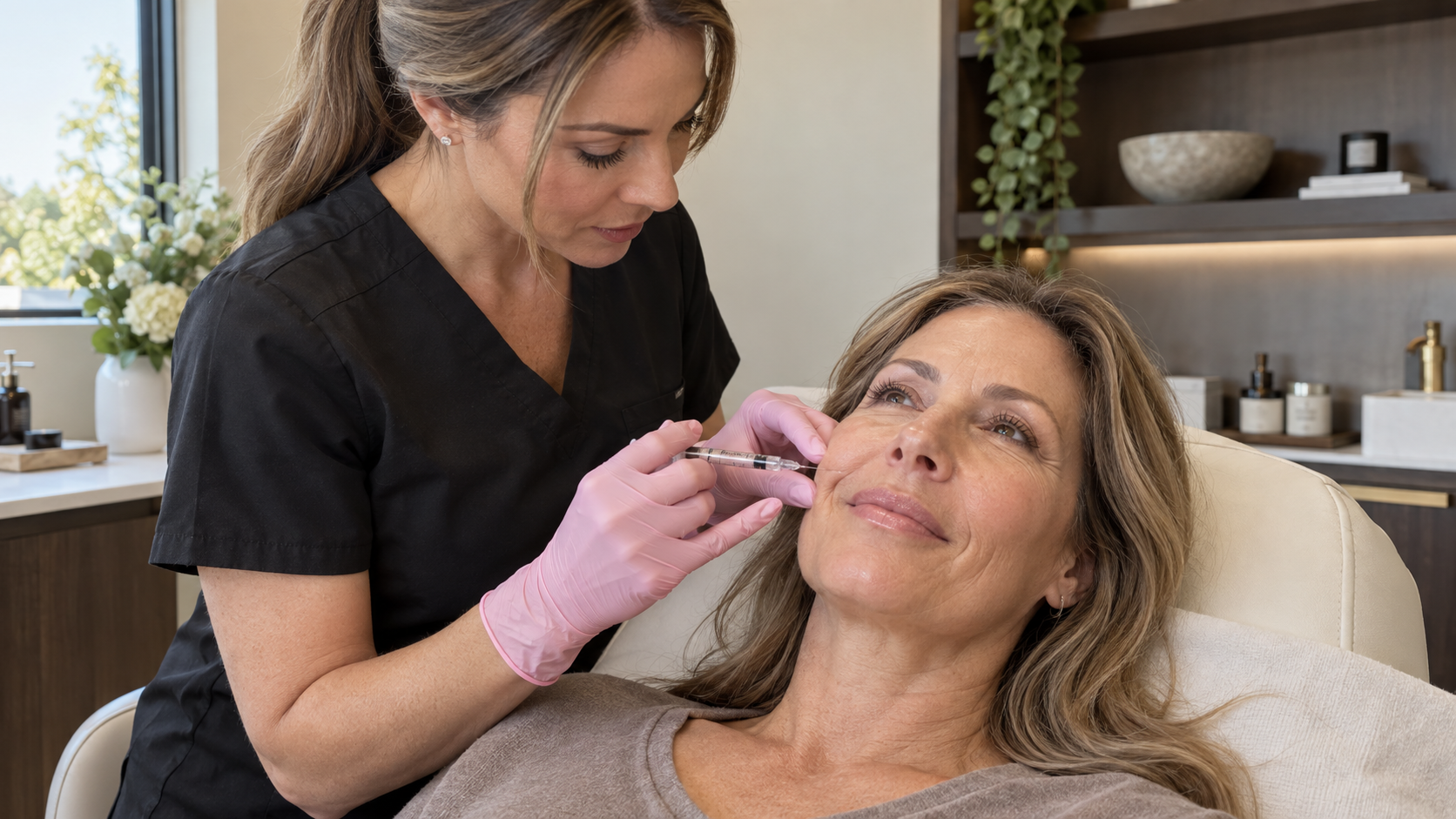
An aesthetic professional can evaluate your skin and explain what level of exfoliation is realistic for the selected treatment.
Be open about medications, skincare products, previous procedures, history of cold sores where relevant, skin sensitivity, and any previous reactions.
Complete information helps your provider assess candidacy and plan safer treatment.
Key Takeaways
What to Remember About Chemical Peel Peeling
- The chemical peel peeling timeline varies according to treatment depth, formulation, and individual response.
- Skin usually does not begin visibly peeling immediately after treatment.
- Tightness, dryness, redness, or sensitivity may occur before flaking starts.
- With many peels that cause visible shedding, flaking may begin around days two to three.
- Peeling can become more noticeable over the following several days.
- Different parts of the face may begin peeling at different times.
- Gentler peels may produce very little visible shedding.
- Not peeling dramatically does not automatically mean your treatment failed.
- More peeling does not necessarily produce better results.
- Stronger peels generally require more recovery planning.
- Never pick or pull loose skin.
- Avoid scrubs and exfoliating devices during recovery.
- Follow your provider’s cleansing instructions.
- Use only appropriate, provider-approved moisturizers and skincare.
- Retinoids, exfoliating acids, and other irritating actives may need to be temporarily paused.
- Protect treated skin carefully from UV exposure.
- Albuquerque’s strong sun exposure makes post-peel sun protection particularly important.
- Makeup timing depends on the treatment and your provider’s instructions.
- Heat, heavy exercise, and sweating may need to be temporarily limited.
- Do not try to force peeling if it has not started.
- Plan unfamiliar peels well ahead of important events.
- Chemical peel frequency should be individualized.
- Contact your provider if recovery differs significantly from what you were told to expect.
- Seek appropriate medical care for severe or concerning reactions.
Frequently Asked Questions
When does skin usually start peeling after a professional chemical peel?
With many professional peels that produce visible shedding, flaking may begin approximately two to three days after treatment. The exact chemical peel peeling timeline depends on the peel formulation, treatment depth, your skin, and your individual response. A gentler peel may produce only mild dryness or little visible peeling at all.
Is it normal if my skin doesn’t peel after a chemical peel?
Yes, a lack of dramatic peeling does not automatically mean your chemical peel was ineffective. Some superficial peels are intentionally designed to create gentle exfoliation with minimal visible shedding, while individual responses can also differ. Do not use extra acids, scrubs, or exfoliating products to force peeling; contact your provider if you are unsure whether your response is expected.
How long does peeling last after a chemical peel?
Visible peeling from a lighter professional peel may resolve within several days, while stronger treatments can require a longer recovery period. Your provider should explain the expected timeline based on the specific peel used because there is no universal number of peeling days. Continue gentle skincare and sun protection even after visible flaking has stopped.
Can I pull off skin that is already peeling?
No, you should allow peeling skin to shed naturally rather than pulling, picking, scrubbing, or manually exfoliating it. Removing skin prematurely can expose more vulnerable tissue and may increase irritation or the risk of unwanted discoloration. Follow your provider’s cleansing and moisturizing instructions until the peeling phase has resolved.
When should I contact my provider after a chemical peel?
Contact your provider if your reaction is substantially different from what you were told to expect or if you have persistent concerns about redness, swelling, pain, or healing. Severe or worsening pain, extensive blistering, significant swelling, open sores, drainage, signs of infection, or other serious symptoms require prompt professional assessment. When symptoms appear medically urgent, seek appropriate immediate medical care rather than waiting for a routine follow-up.