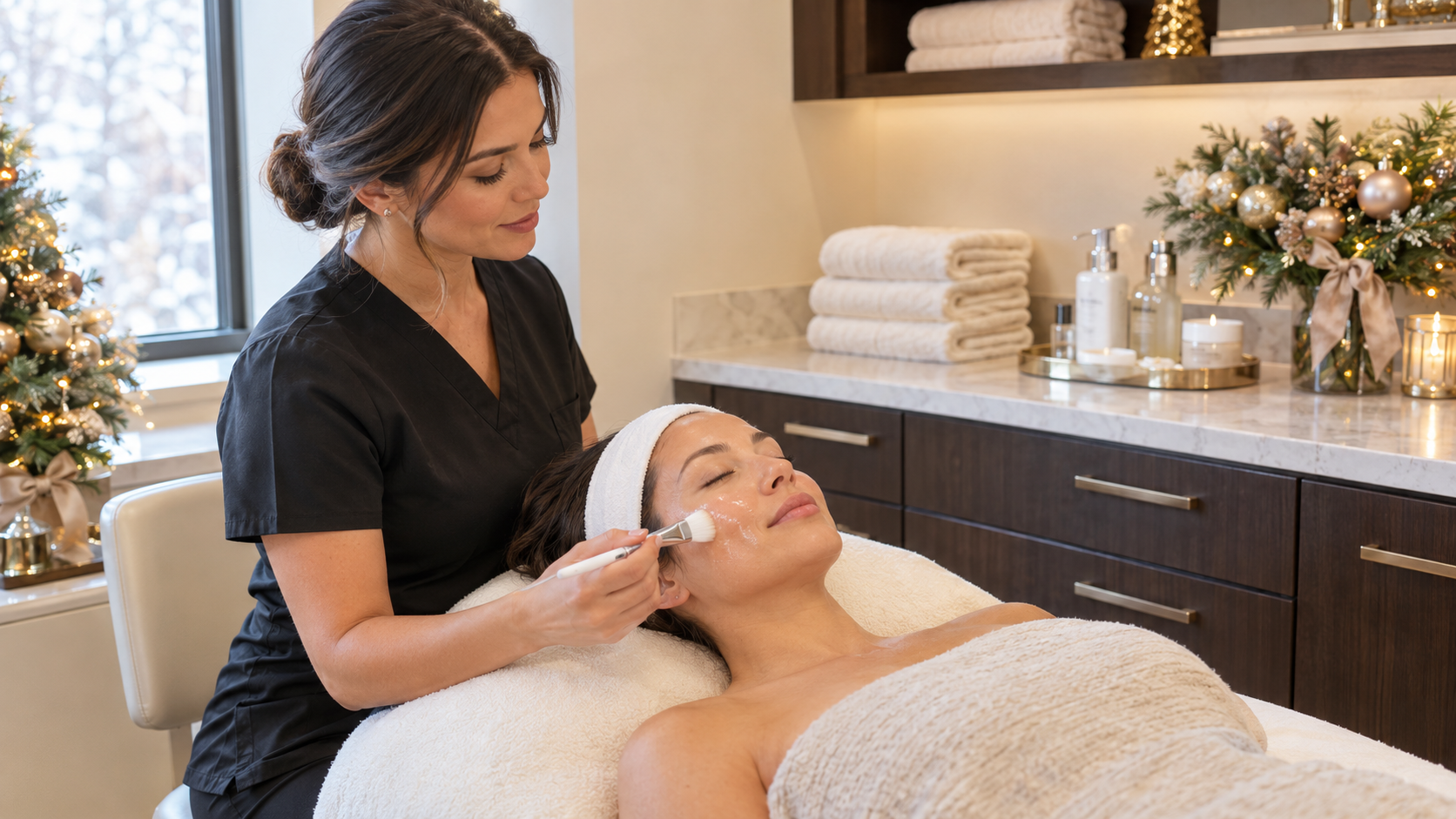
When skin becomes rough during winter, reaching for a heavier moisturizer is often the first response. Moisturizer can be important, but rough-looking skin may involve more than a lack of hydration.
Dead skin cells naturally accumulate and shed from the skin’s surface. When the surface appears uneven, light reflects less uniformly, which can contribute to a dull or lackluster appearance.
At the same time, cold weather, low humidity, indoor heating, hot showers, aggressive cleansing, and excessive exfoliation can leave skin feeling tight and uncomfortable.
That means two people complaining about “dry, dull winter skin” may need very different approaches.
Someone experiencing surface buildup may benefit from controlled professional exfoliation. Someone with significant irritation, cracking, or barrier disruption may first need a gentler routine focused on recovery.
AlluraDerm’s Micro Chemical Peel is one professional exfoliation option for patients interested in addressing concerns such as dullness and uneven surface texture. Whether it is appropriate depends on the condition of the skin and the individual’s treatment goals.
Jump To:
- TLDR – Quick Guide
- Why Can Skin Look Duller During Winter?
- What Is a Micro Chemical Peel?
- How Can a Micro Chemical Peel Help Dull Skin?
- Can a Micro Chemical Peel Improve Rough Winter Texture?
- Is Dull Skin the Same as Dry Skin?
- What Does a Damaged Skin Barrier Feel Like?
- Can You Exfoliate Too Much During Winter?
- What Happens During a Micro Chemical Peel?
- Does a Micro Chemical Peel Make Your Face Peel?
- How Long Does Winter Skin Take to Look Smoother After a Peel?
- Can a Chemical Peel Help Makeup Sit More Smoothly?
- Should You Get a Chemical Peel Right Before a Holiday Event?
- What Should You Avoid After a Micro Chemical Peel?
- Why Is Moisturizer Important After Exfoliation?
- Does Sunscreen Matter During an Albuquerque Winter?
- How Does Albuquerque's Climate Affect Winter Skin?
- Can a Micro Chemical Peel Help Uneven Skin Tone Too?
- How Is a Micro Chemical Peel Different From Microdermabrasion?
- Can You Combine a Micro Chemical Peel With Other Treatments?
- How Often Should You Get a Micro Chemical Peel?
- Can One Peel Permanently Fix Dull Winter Skin?
- What Home Skincare Supports Smoother Winter Texture?
- Who May Not Be Ready for a Micro Chemical Peel?
- When Should You Consider Professional Help for Winter Dullness?
- Is a Micro Chemical Peel for Dull Skin Worth Considering in Winter?
- Key Takeaways
- Frequently Asked Questions
TLDR – Quick Guide
What to Know About Micro Chemical Peels and Winter Texture
- A Micro Chemical Peel is a professional superficial exfoliation treatment.
- Chemical peels use selected acids or other peeling agents to create controlled exfoliation.
- Superficial exfoliation can help remove accumulated dead surface cells.
- Surface buildup can contribute to dull-looking and rough-feeling skin.
- A Micro Chemical Peel may help the complexion appear smoother and brighter.
- Results depend on the individual’s skin condition and treatment plan.
- Not every case of winter roughness is caused by surface buildup.
- Dehydrated skin lacks sufficient water and may feel tight or look less plump.
- A compromised skin barrier can cause sensitivity, stinging, redness, or flaking.
- Aggressively exfoliating already irritated skin may worsen discomfort.
- A professional assessment can help distinguish exfoliation needs from barrier-support needs.
Why Can Skin Look Duller During Winter?
Dry Conditions Can Change the Skin’s Surface
Winter can affect the way skin looks and feels even when your skincare products have not changed.
Outdoor air may become colder and drier. Indoors, heating systems can further reduce environmental humidity.
These conditions can contribute to water loss from the skin’s surface, especially when combined with long hot showers, harsh cleansers, or skincare routines that contain several exfoliating ingredients.
As the surface becomes rougher, the complexion may appear less radiant.
Instead of reflecting light evenly, an irregular surface can make skin look flat or tired.
That is one reason dullness and rough texture frequently appear together.
What Is a Micro Chemical Peel?
A Controlled Form of Professional Exfoliation
Chemical peels use carefully selected peeling agents to exfoliate layers of the skin.
Peels can vary significantly in formulation, strength, depth, treatment goals, and expected downtime. A superficial or “micro” peel is designed to provide relatively light exfoliation compared with deeper resurfacing procedures.
During treatment, the provider applies the selected solution according to the protocol appropriate for the patient’s skin.
The goal is controlled exfoliation rather than aggressively stripping the skin.
As treated surface cells shed naturally, the complexion may begin to look smoother and more refreshed.
How Can a Micro Chemical Peel Help Dull Skin?
Removing Surface Buildup Can Improve Light Reflection
Healthy-looking radiance is partly influenced by how smoothly light reflects from the skin.
When the surface is irregular because of accumulated dead cells, dryness, or uneven texture, that reflection becomes less uniform.
Controlled exfoliation can help remove some of that superficial buildup.
As a result, skin may appear:
- Smoother
- Fresher
- More even
- Less rough
- More radiant
That does not mean a peel permanently eliminates dullness.
Sun exposure, skincare habits, hydration, environmental conditions, and normal cellular turnover continue after treatment.
Think of a peel as one component of ongoing skin maintenance rather than a permanent reset button.
Can a Micro Chemical Peel Improve Rough Winter Texture?
It Depends on What Is Causing the Roughness
Yes, a Micro Chemical Peel may improve certain types of rough surface texture.
If the roughness is largely associated with accumulated surface cells and uneven exfoliation, a superficial peel may help create a smoother-looking complexion.
However, not all roughness should be exfoliated.
Skin that is inflamed, cracked, extremely sensitive, or experiencing significant barrier disruption may not respond well to simply adding more exfoliation.
This distinction matters.
The goal should not be:
“My skin feels rough, so I need the strongest exfoliation possible.”
A better question is:
“Why does my skin feel rough, and what does it need right now?”
Is Dull Skin the Same as Dry Skin?
These Concerns Can Overlap Without Being Identical
“Dull” describes appearance.
“Dry” generally refers to skin lacking sufficient oil, although people commonly use the word to describe several sensations including tightness and flaking.
“Dehydrated” skin refers to insufficient water content and can occur in different skin types.
A person can therefore have oily skin that still looks dehydrated and dull.
Another person may have genuinely dry skin with visible flaking.
Someone else may have adequate hydration but significant surface buildup that makes the complexion appear uneven.
AlluraDerm discusses professional options for dry and dehydrated skin, which can be useful when winter concerns extend beyond simple surface dullness.
What Does a Damaged Skin Barrier Feel Like?
Sensitivity Can Be a Sign to Slow Down
The skin barrier helps limit water loss while protecting the body from environmental exposure.
When that barrier becomes disrupted, the skin may become more reactive.
Possible signs include:
- Tightness
- Stinging
- Burning
- Increased sensitivity
- Redness
- Flaking
- Rough patches
- Discomfort after applying products
These symptoms can overlap with ordinary dryness.
That is why repeatedly exfoliating rough skin without understanding its condition can become counterproductive.
If your moisturizer suddenly stings or products you normally tolerate become uncomfortable, adding another exfoliant may not be the first step you need.
Can You Exfoliate Too Much During Winter?
More Exfoliation Does Not Always Mean Smoother Skin
Yes.
One of the easiest skincare mistakes is responding to flakes by increasing exfoliation.
A person sees rough skin and adds an exfoliating toner.
The texture remains, so they add a scrub.
Then they use a retinoid.
Then they schedule another exfoliating treatment.
Eventually, the routine intended to create smoother skin may leave it feeling more sensitive and uncomfortable.
Professional exfoliation should be purposeful.
Your provider can evaluate your current skincare routine and determine whether you should temporarily modify certain active ingredients before or after a peel.
What Happens During a Micro Chemical Peel?
The Appointment Begins With Skin Assessment
Exact treatment protocols vary, but a professional chemical peel generally starts with evaluating the skin and reviewing relevant history.
Your provider may ask about:
- Current skincare products
- Retinoid use
- Recent exfoliation
- Previous chemical peels
- Recent procedures
- Skin sensitivity
- Sun exposure
- Medications
- Current irritation
- Treatment goals
The skin is then prepared for treatment.
The appropriate peeling solution is applied according to the selected protocol.
Depending on the formulation, patients may experience sensations such as warmth or tingling.
The provider then completes the treatment according to the product’s instructions and gives you aftercare guidance.
Does a Micro Chemical Peel Make Your Face Peel?
Visible Flaking Can Vary
The word “peel” can create the expectation that large sheets of skin must come off afterward.
That is not necessarily what happens after a superficial peel.
Some people may experience mild dryness or fine flaking.
Others may notice relatively little visible peeling.
The amount of visible shedding does not provide a simple measurement of treatment quality.
Trying to make the skin peel more aggressively by adding home exfoliants can interfere with recovery.
Follow the aftercare instructions instead of chasing visible peeling.
How Long Does Winter Skin Take to Look Smoother After a Peel?
Changes Develop as the Skin Moves Through Recovery
Skin does not necessarily look its best immediately after treatment.
Depending on the peel and individual response, temporary dryness, tightness, redness, or flaking may occur before the complexion looks refreshed.
Recovery varies.
The condition of your skin before treatment also matters.
Someone beginning with well-supported skin and mild surface dullness may have a different experience from someone with substantial dryness or sensitivity.
Plan treatment with enough flexibility that you are not relying on your skin to look a specific way the next morning.
Can a Chemical Peel Help Makeup Sit More Smoothly?
Surface Texture Can Influence Makeup Application
Foundation and concealer can emphasize rough texture when they collect around flakes or dry patches.
Improving surface smoothness may help makeup appear more even after the skin has completed its post-treatment recovery.
However, applying makeup too soon after a peel may not be appropriate.
Follow your provider’s instructions about when makeup can safely be resumed.
Also remember that exfoliation cannot compensate for an inadequate skincare routine.
If dehydration continues, rough texture may return even after a successful peel.
Should You Get a Chemical Peel Right Before a Holiday Event?
Give Your Skin Time to Recover
Winter often coincides with holiday parties, photographs, weddings, travel, and family gatherings.
That can make a brightening treatment appealing.
But scheduling a peel immediately before an important event can create unnecessary pressure.
Temporary redness, dryness, or flaking may occur.
Individual responses vary, even when the treatment is superficial.
If you have an important date approaching, tell your provider before treatment so they can discuss timing and whether a peel is appropriate.
What Should You Avoid After a Micro Chemical Peel?
Keep the Routine Simple During Recovery
Aftercare depends on the specific peel, so follow the instructions given by your provider.
In general, post-peel routines often emphasize gentle skincare.
That may mean temporarily avoiding unnecessary irritation from:
- Facial scrubs
- Exfoliating brushes
- Strong acids
- Retinoids
- Picking or peeling flakes
- Excessive heat
- Unprotected sun exposure
The exact timing for restarting active ingredients varies.
Do not assume that because your skin looks normal, every product should immediately return to your routine.
Why Is Moisturizer Important After Exfoliation?
Exfoliation and Hydration Perform Different Jobs
A chemical peel helps address surface buildup through controlled exfoliation.
A moisturizer supports the skin in a different way.
Depending on its formulation, a moisturizer may include ingredients that attract water, soften the skin, or reduce moisture loss.
That makes moisturization particularly relevant during dry winter conditions.
You should not think of exfoliation and moisturization as competing strategies.
For appropriate candidates, they can play complementary roles within a professionally guided routine.
Does Sunscreen Matter During an Albuquerque Winter?
Winter Does Not Eliminate UV Exposure
It is easy to associate sunscreen exclusively with hot summer days.
Ultraviolet exposure, however, does not disappear simply because the temperature drops.
Sun protection is particularly important when your skincare plan includes exfoliating or resurfacing treatments.
Use the sunscreen recommended for your skin and apply it according to its directions.
Other protective strategies, including seeking shade and using appropriate clothing or hats, can also help reduce unnecessary UV exposure.
How Does Albuquerque’s Climate Affect Winter Skin?
Low Humidity Can Make Hydration More Challenging
Albuquerque’s climate provides useful context for winter skincare.
Dry air can contribute to moisture loss from the skin, while significant year-round sun exposure means photoprotection remains relevant even when temperatures are lower.
Indoor heating can add another source of dryness.
As a result, a winter routine that worked in a more humid environment may not feel sufficient in New Mexico.
Some people may benefit from adjusting cleanser, moisturizer, exfoliation frequency, or professional treatment scheduling as conditions change.
That does not mean every Albuquerque patient needs a chemical peel.
It means seasonal environment should be considered when determining why skin suddenly feels different.
Can a Micro Chemical Peel Help Uneven Skin Tone Too?
Surface Exfoliation May Address More Than Texture
Dullness and uneven tone can occur together.
A superficial peel may be selected as part of a plan to improve the appearance of certain forms of uneven tone and surface discoloration.
However, pigmentation is complex.
Different types of discoloration can have different causes and may require different treatment approaches.
Some pigmentation concerns can also worsen with inappropriate treatment or insufficient sun protection.
A professional evaluation is therefore more useful than selecting a peel simply because the skin looks uneven.
How Is a Micro Chemical Peel Different From Microdermabrasion?
Both Exfoliate, but They Use Different Methods
Microdermabrasion and chemical peels are both used to exfoliate the skin, but they accomplish that goal differently.
Microdermabrasion is a physical exfoliation technique.
A chemical peel uses a chemical solution to produce controlled exfoliation.
Neither option is automatically better for everyone.
Skin sensitivity, current condition, treatment goals, previous procedures, and desired downtime can influence which approach makes more sense.
This is why AlluraDerm offers multiple facial and laser services rather than treating every form of dullness with the same procedure.
Can You Combine a Micro Chemical Peel With Other Treatments?
Combination Plans Should Be Purposeful
Patients often want to address several concerns simultaneously.
For example, you might have:
- Dullness
- Dryness
- Fine lines
- Uneven tone
- Rough texture
- Enlarged-looking pores
Different treatments address different aspects of those concerns.
A provider may sometimes recommend combining or alternating procedures as part of a broader plan.
However, more treatment is not automatically better treatment.
Timing matters, especially when several procedures affect the skin’s surface.
Ask your provider how much recovery time is appropriate between services rather than creating your own aggressive treatment schedule.
How Often Should You Get a Micro Chemical Peel?
Frequency Should Reflect Your Skin, Not a Fixed Calendar
There is no ideal peel schedule that applies universally.
Treatment frequency can depend on:
- Peel formulation
- Peel strength
- Skin condition
- Treatment goal
- Sensitivity
- Other professional procedures
- Home skincare
- Previous response
Someone addressing mild seasonal dullness may have a different plan from someone working on persistent texture concerns.
Skin also changes throughout the year.
A routine that is comfortable during summer may become excessive during a dry winter.
Your treatment schedule should be adjusted accordingly.
Can One Peel Permanently Fix Dull Winter Skin?
Maintenance Still Matters
A single peel may make the complexion look smoother or brighter, but skin continues to respond to its environment and daily habits.
Winter dryness can return.
Dead surface cells continue to accumulate.
Sun exposure continues.
Your home routine therefore remains important.
Professional treatments generally work best when they complement consistent daily skincare rather than replacing it.
What Home Skincare Supports Smoother Winter Texture?
Keep the Routine Consistent and Appropriate
An elaborate routine is not necessarily a better routine.
Winter skin may benefit from focusing on fundamentals such as:
Gentle cleansing: Avoid unnecessarily stripping the skin.
Appropriate moisturization: Select products that support your skin’s hydration and comfort.
Sun protection: Maintain daily UV protection.
Controlled use of active ingredients: Avoid stacking multiple exfoliating products simply because the skin looks dull.
Consistency: Give an appropriate routine time to work.
If you are receiving professional treatments, tell your provider what you use at home.
This allows your treatment and skincare routine to complement rather than compete with each other.
Who May Not Be Ready for a Micro Chemical Peel?
Skin Condition Matters Before Exfoliation
Not everyone experiencing winter roughness is immediately ready for a peel.
A provider may need to reconsider or postpone treatment depending on factors such as active irritation, compromised skin, recent procedures, certain medications, medical history, or other contraindications.
This is why self-diagnosing roughness can be misleading.
The flakes you want to exfoliate away may be signaling that your skin needs less intervention rather than more.
Professional assessment helps determine the appropriate next step.
When Should You Consider Professional Help for Winter Dullness?
Persistent Roughness May Need a More Individualized Plan
If you have changed your moisturizer and simplified your routine but your skin remains persistently rough, dull, or uncomfortable, it may be useful to have the skin evaluated.
Professional assessment can help determine whether the concern appears related to:
- Surface buildup
- Dehydration
- Dry skin
- Barrier disruption
- Uneven pigmentation
- Another skin condition
- A combination of factors
From there, treatment can become more targeted.
A Micro Chemical Peel may be one option.
Another facial treatment or a barrier-supportive home routine may be more appropriate.
The objective is not simply to perform a procedure.
It is to choose the procedure—or skincare strategy—that matches what your skin actually needs.
Is a Micro Chemical Peel for Dull Skin Worth Considering in Winter?
The Best Results Begin With the Right Reason for Treatment
A Micro Chemical Peel for Dull Skin can be a useful option when winter texture is associated with superficial buildup and uneven exfoliation.
By creating controlled exfoliation, the treatment may help the surface appear smoother, fresher, and more radiant.
But winter roughness is not always an exfoliation problem.
If the skin is significantly dehydrated, sensitive, or experiencing barrier disruption, adding more exfoliation may not be the best first move.
That is why AlluraDerm’s personalized approach is particularly relevant for seasonal skincare.
Instead of treating every rough patch the same way, a professional can evaluate the condition of your skin, review your current routine, discuss your goals, and determine whether a Micro Chemical Peel or another option makes sense.
The goal is not simply to peel.
It is to help your skin look healthier, smoother, and more refreshed without asking it to tolerate more treatment than it needs.
Key Takeaways
What to Remember About Micro Peels and Winter Dullness
- A Micro Chemical Peel for Dull Skin provides controlled superficial exfoliation.
- Surface buildup can contribute to rough-looking and lackluster skin.
- Removing accumulated surface cells may help skin appear smoother and brighter.
- Winter dullness can involve several factors rather than one single cause.
- Dry skin, dehydrated skin, and dull skin are not identical concerns.
- Skin barrier disruption can also create roughness, sensitivity, and flaking.
- Not every rough patch should immediately be exfoliated.
- Over-exfoliation may increase irritation and discomfort.
- Chemical peels vary in formulation, depth, and intensity.
- A superficial peel is different from medium and deeper peels.
- Visible peeling is not required for every treatment.
- Mild temporary dryness, tightness, redness, or flaking may occur.
- Recovery varies between individuals.
- Picking peeling skin can interfere with normal recovery.
- Gentle skincare is important after treatment.
- Moisturization and exfoliation address different needs.
- Daily sun protection remains important during winter.
Frequently Asked Questions
Can a Micro Chemical Peel for dull skin help rough winter texture?
A Micro Chemical Peel may improve rough-looking winter texture when accumulated surface cells and uneven exfoliation contribute to the problem. Controlled superficial exfoliation can help the complexion appear smoother and more radiant as the skin completes its post-treatment recovery. However, skin that is significantly irritated, dehydrated, or barrier-compromised may need a different approach before additional exfoliation.
Will my skin visibly peel after a Micro Chemical Peel?
Visible peeling varies depending on the peel formulation, treatment intensity, skin condition, and individual response. Some people may notice mild dryness or fine flaking, while others experience relatively little visible shedding. The amount of peeling you can see should not be used as the sole measure of whether a superficial chemical peel was effective.
Is a chemical peel good for extremely dry winter skin?
A chemical peel is not automatically the right treatment simply because skin is dry, flaky, or rough. If the skin barrier is significantly irritated or compromised, a provider may recommend addressing hydration and barrier support before performing additional exfoliation. An assessment can help determine whether the roughness reflects surface buildup, dehydration, irritation, or a combination of concerns.
How should I care for my skin after a Micro Chemical Peel?
Follow the specific aftercare instructions provided for your peel, since recommendations can vary according to the formulation and your skin. A gentle routine commonly emphasizes appropriate cleansing, moisturization, sun protection, and temporarily avoiding unnecessary exfoliating or irritating products. Do not pick at flaking skin or add stronger exfoliants in an attempt to accelerate the peeling process.
Is winter a good time to get a Micro Chemical Peel in Albuquerque?
Winter can be a reasonable time to discuss a Micro Chemical Peel if dullness and rough surface texture are concerns, but candidacy depends on the current condition of your skin. Albuquerque’s dry climate can make hydration and barrier support especially important, while sun protection remains necessary despite cooler temperatures. A professional consultation can help determine whether a peel fits your winter skincare plan or whether another treatment should come first.