Laser resurfacing has become one of the most trusted ways to rejuvenate skin, smooth texture, and soften signs of aging. But with technologies ranging from Fraxel® to hybrid fractional lasers to full-field CO2, choosing the right option can feel overwhelming. Each laser type offers distinct advantages, downtime levels, and intensity—making personalized guidance essential.
Clinics like AlluraDerm help patients match their goals with the right technology, ensuring effective and safe outcomes tailored to individual skin needs.
Jump To:
TLDR Quick Guide
- Fraxel® is a fractional, non-ablative laser ideal for texture, pigmentation, and moderate aging concerns.
- Other laser resurfacing options—ablative, non-ablative, hybrid, or full-field—vary in strength, downtime, and intensity.
- Your ideal choice depends on skin type, downtime tolerance, desired speed of results, and long-term goals.
- A professional consultation ensures the safest, most effective treatment plan tailored to your skin.
Understanding Fraxel® Laser Resurfacing
What Fraxel® Treats Best
Fraxel® is a fractional, non-ablative laser that targets thousands of microscopic zones without fully removing the surface layer of skin.
It’s ideal for improving fine lines, sun damage, pigmentation, acne scars, and overall texture.
The results build gradually, offering noticeable improvement with minimal social downtime.
How Fraxel® Works
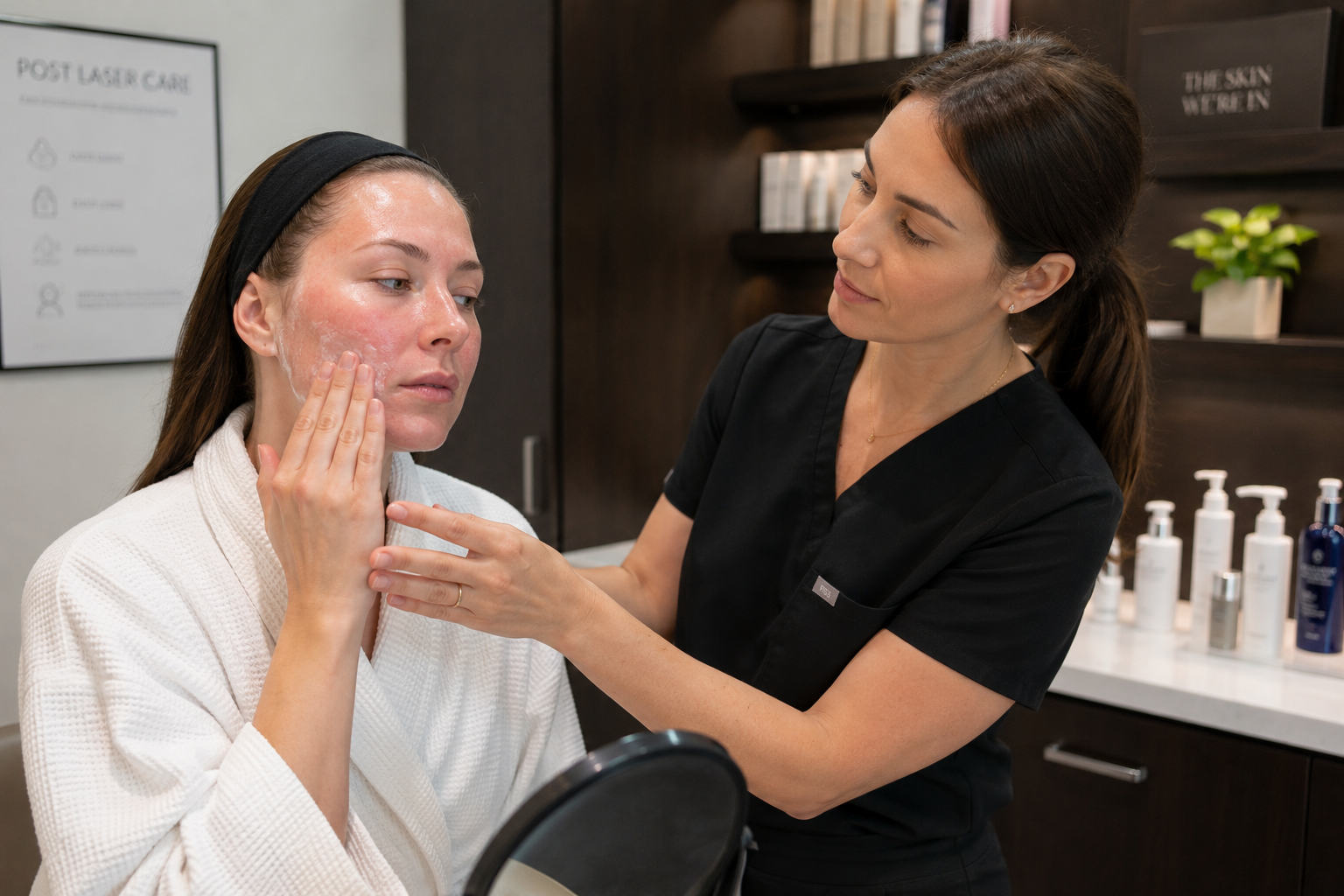
Fraxel® creates controlled micro-injuries that trigger collagen remodeling while leaving surrounding tissue intact.
This accelerates healing and reduces downtime compared to fully ablative lasers.
Most clients benefit from 3–5 sessions spaced several weeks apart.
Ideal Candidate for Fraxel®
Fraxel® is well-suited for individuals seeking steady improvement without the long recovery associated with deeper resurfacing.
It’s safe for many skin tones when performed by experienced providers.
Those with deeper wrinkles or significant laxity may need a more intensive treatment option.
Other Laser Resurfacing Options Compared
Ablative Lasers (CO2, Er:YAG)
Ablative lasers vaporize the top layer of skin to create dramatic rejuvenation.
They offer the most transformative results but require longer downtime—sometimes 1–2 weeks.
These are typically recommended for deep wrinkles, severe scarring, and advanced aging.
Non-Ablative Lasers
These lasers heat the dermis without removing skin, stimulating gradual collagen production.
They are gentler with minimal downtime but require more sessions for results.
Fraxel® belongs to this category but is more powerful than many standard non-ablative devices.
Hybrid Fractional Lasers
Hybrid lasers blend ablative and non-ablative wavelengths in a single treatment.
This allows for stronger results with controlled downtime.
They’re often chosen as a middle ground between Fraxel® and fully ablative resurfacing.
Full-Field Resurfacing
This traditional method resurfaces the entire treatment area rather than micro-columns.
It delivers dramatic, long-lasting results but has the highest downtime.
It’s best for advanced aging, deep lines, and significant texture irregularities.
How to Choose the Right Laser for Your Skin Goals
Skin Concerns
Your provider evaluates issues such as pigmentation, wrinkles, scars, and texture.
Fraxel® excels with moderate concerns, while deeper issues may require hybrid or ablative options.
A custom treatment plan ensures best-case results.
Downtime Tolerance
Fraxel® offers 3–7 days of downtime, while full-field CO2 may require 10–14 days.
If you prefer gradual improvement with minimal interruption, Fraxel® is ideal.
If you want accelerated, dramatic results, stronger resurfacing may be recommended.
Skin Tone & Safety
Not all lasers suit all skin tones; melanin-rich skin requires careful selection to reduce risk.
Fraxel® non-ablative is generally safer for a wider range of skin types.
A personalized consultation confirms which device offers the safest pathway.
Desired Speed of Results
Fraxel® builds results over several treatments.
Ablative and hybrid lasers often deliver more dramatic results with fewer sessions.
Your timeline determines the right level of treatment intensity.
Complementary Treatments That Boost Laser Results
Laser resurfacing works best alongside skin health maintenance. Explore helpful options like:
- Facials & Laser Services for routine skin improvement
- Neurotoxin treatments to soften expression lines
- Fillers & injectables for volume restoration and contour
Together, these treatments create a holistic, long-term rejuvenation plan tailored to your goals.
Key Takeaways
- Fraxel® is a versatile, non-ablative option great for texture, pigmentation, and moderate aging.
- Other laser types vary by power, downtime, and targeted concerns.
- Choosing the right resurfacing treatment depends on goals, skin tone, and recovery time.
- Ablative and hybrid lasers deliver faster results but require more downtime.
- A professional consultation ensures a customized, safe treatment plan.
FAQs
Is Fraxel® safe for all skin types?
Fraxel® is safer than many lasers for a wide range of skin tones, especially non-ablative versions. Providers still evaluate individual risk factors like sensitivity and pigment levels. A professional consultation ensures optimal safety and outcome.
How many Fraxel® treatments do I need for best results?
Most patients see significant improvement after 3–5 sessions, spaced several weeks apart. This schedule allows collagen to rebuild gradually and naturally. Your provider may adjust the plan based on your goals.
What is the downtime difference between Fraxel® and CO2 resurfacing?
Fraxel® typically requires 3–7 days of social downtime. CO2 resurfacing can require 10–14 days or more due to its deeper structural impact. Your lifestyle and recovery availability influence which treatment makes sense.
Can Fraxel® be combined with injectables?
Yes, Fraxel® often pairs well with fillers and neurotoxins to enhance overall facial rejuvenation. Combining the two can address both skin quality and structure. Your provider will help sequence treatments safely.
Will Fraxel® remove deep wrinkles or significant laxity?
Fraxel® can soften deeper lines but may not fully correct severe wrinkles or laxity. Ablative or hybrid lasers may be recommended for stronger correction. A consultation determines which device aligns best with your goals.